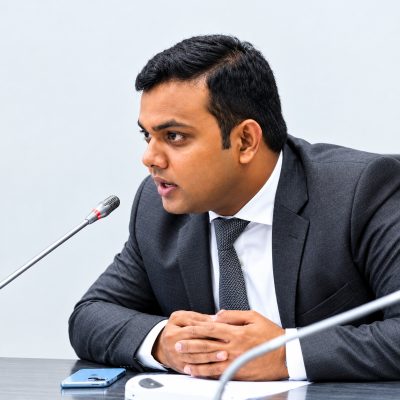
Sudhanshu Kumar is a researcher and subject matter expert specialising in Artificial Intelligence (AI), Cybersecurity, Cyberwarfare, and the evolving intersection of emerging technologies, geopolitics, and national security. He is associated with the Centre for Joint Warfare Studies (CENJOWS), Headquarters Integrated Defence Staff (HQ IDS), Ministry of Defence, Government of India, in New Delhi, where his areas of expertise encompass the strategic and security implications of advanced technologies.
He is also a Visiting Research Fellow at the Moscow State Institute of International Relations (MGIMO), Moscow, and has pursued doctoral research at the Centre for Russian and Central Asian Studies, School of International Studies, Jawaharlal Nehru University (JNU), New Delhi, focusing on artificial intelligence in Russia. His academic and research interests extend to AI governance, technology-driven strategic competition, cyber operations, military innovation, nuclear deterrence, and the changing character of modern warfare.
Kumar’s research examines how artificial intelligence and cyber capabilities are reshaping defence planning, strategic decision-making, crisis stability, and international security. His work explores the implications of AI-enabled military systems, autonomous technologies, cyber threats, and the accelerating convergence of technological innovation and geopolitical rivalry, with particular relevance to South Asia, Russia, and the wider international security environment.
Among his published research is “Artificial Intelligence and the Nuclear Deterrence Paradox: Rethinking Deterrence in South Asia and the Middle East,” published online in the Journal of World Affairs: Voice of the Global South in January 2026. The study examines the relationship between AI integration, nuclear deterrence, and escalation risks, drawing comparative insights from the India–Pakistan and Iran–Israel conflicts of 2025.
Through his research and analytical contributions, Kumar engages with critical questions surrounding the future of warfare, the strategic consequences of emerging technologies, and the challenges policymakers face in maintaining security and stability in an increasingly technology-driven world.
His areas of specialisation include artificial intelligence and security policy, cyberwarfare and cybersecurity, defence technology, military innovation, geopolitical risk analysis, strategic stability, and the implications of emerging technologies for national and international security.
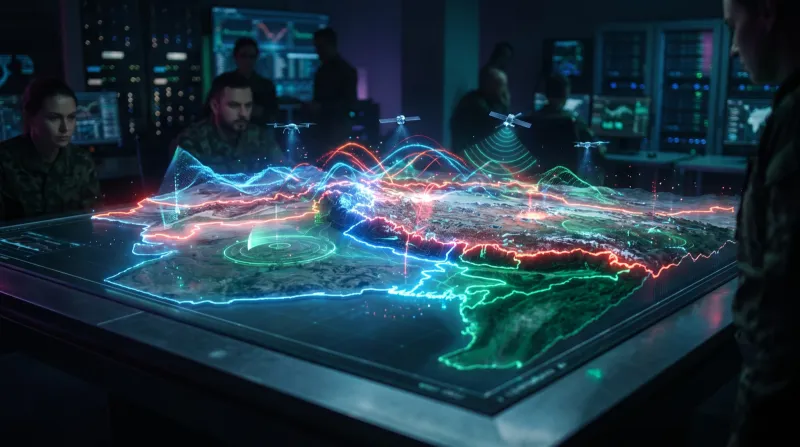
India holds a significant advantage over Pakistan in electronic warfare (EW), but China’s rapidly advancing AI-driven capabilities present a far more complex strategic challenge. As Beijing strengthens its…