President Donald Trump has hinted at using the U.S. military to deport undocumented immigrants
President-elect Donald Trump has hinted at using the U.S. military to deport undocumented immigrants, a controversial plan that challenges longstanding American traditions barring military involvement in domestic law enforcement. Legal analysts suggest that while the plan may face court challenges, stopping its implementation could prove difficult.

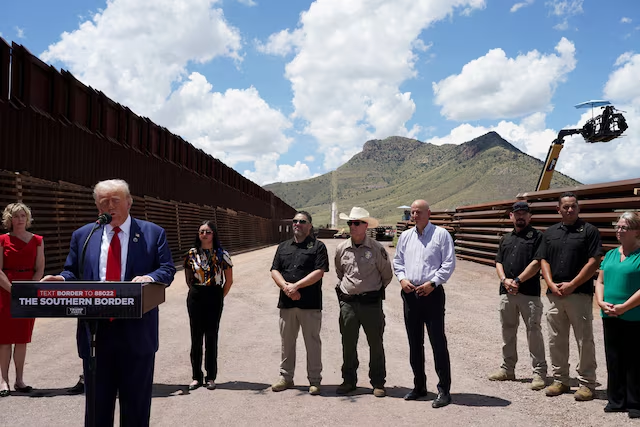
President Donald Trump has hinted at using the U.S. military to deport undocumented immigrants
President-elect Donald Trump has hinted at using the U.S. military to deport undocumented immigrants, a controversial plan that challenges longstanding American traditions barring military involvement in domestic law enforcement. Legal analysts suggest that while the plan may face court challenges, stopping its implementation could prove difficult.
Trump, during his campaign, pledged to take bold measures to address illegal immigration, including the deployment of the military. Advisors to the president-elect have revealed that the military might be tasked with constructing detention centers and assisting in deportation operations. This would allow border patrol agents and immigration officers to focus on their primary duties, such as investigations and arrests.
Under the 1878 Posse Comitatus Act, the U.S. military is generally prohibited from enforcing domestic laws. However, there have been limited instances in the past where presidents have utilized the military in domestic capacities.
Legal experts are divided over Trump’s proposal. Some argue that legal barriers to using the military domestically could prevent the plan’s execution, while others believe the administration might navigate these challenges to implement it.
Trump's proposal has sparked significant debate, with critics raising concerns over the militarization of immigration enforcement and potential violations of constitutional protections. However, supporters of the plan see it as a decisive measure to address illegal immigration and bolster national security.
As Trump prepares to assume office, the proposed policy is expected to face scrutiny in both legal and political arenas. Its implementation, if pursued, could test the boundaries of executive authority and reshape immigration enforcement in the United States.