
Trump Supports Iraq’s Oil Crackdown as Tensions With Kurdish Leaders Escalate
Trump endorsed Baghdad’s campaign against oil smuggling as federal orders over oilfields and border crossings intensified tensions with Kurdish authorities.
CSB News USA
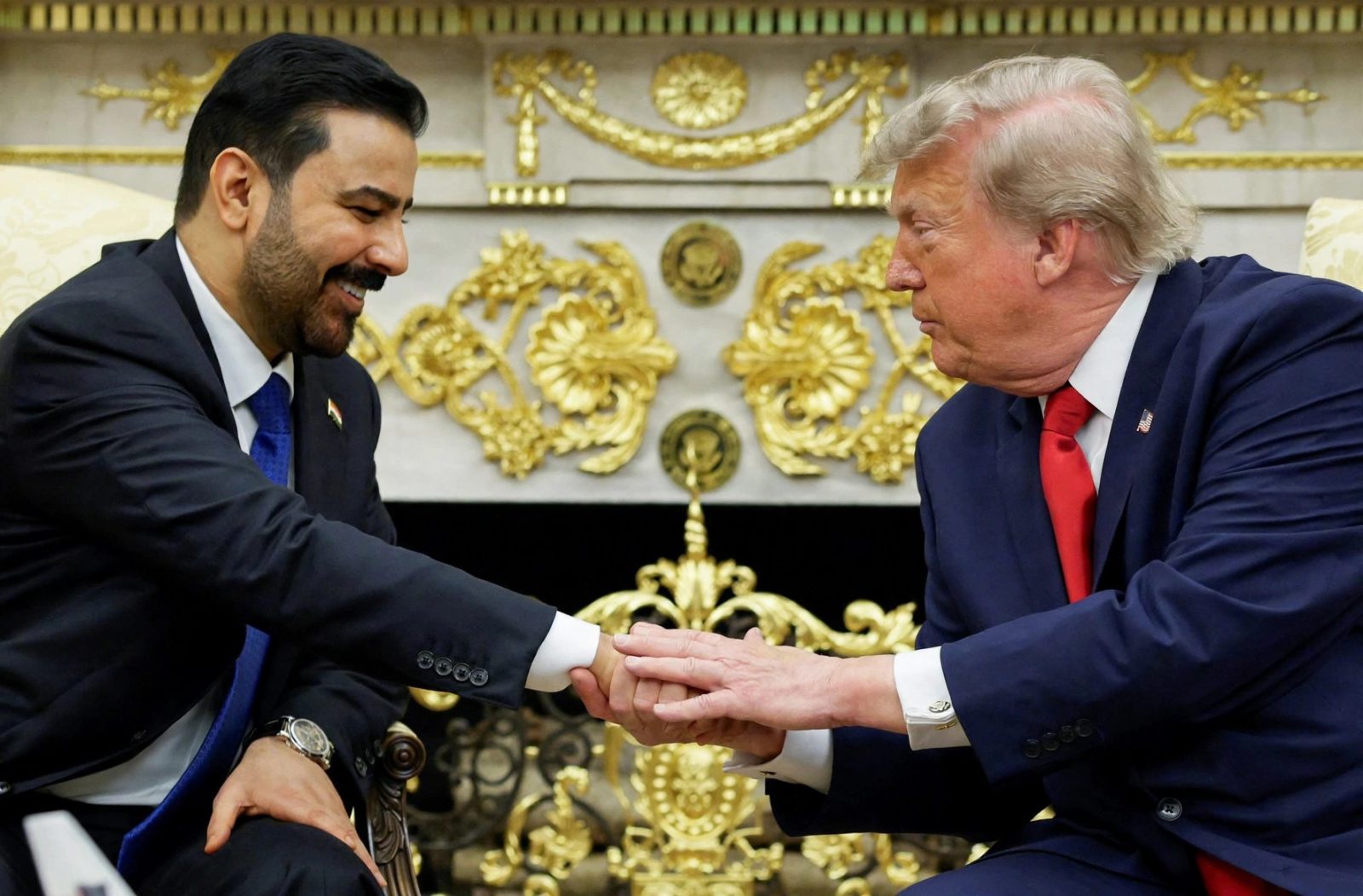
U.S. President Donald Trump has expressed support for Iraqi Prime Minister Ali al-Zaidi’s campaign to stop oil smuggling, tackle corruption and strengthen the central government’s control over the country’s natural resources and security.
Trump announced his position on Friday, November 27, 2026, through a statement published on his Truth Social platform. His endorsement comes at a politically sensitive moment as the Iraqi government moves to take control of oilfields and border crossings in areas administered by the semi-autonomous Kurdistan Region.
Trump said the United States supports al-Zaidi’s efforts to establish government authority throughout Iraq, prevent the illegal movement of Iraqi oil, eliminate corruption and ensure that all weapons remain under the exclusive control of the state.
He also expressed support for the Iraqi prime minister’s goal of building a united, prosperous and strong country capable of making its own political decisions.
The American president’s statement represents an important diplomatic endorsement of Baghdad’s latest campaign. However, the measures have already created serious disagreements between Iraq’s federal government and Kurdish authorities, raising concerns about the country’s political stability.
The dispute intensified after Prime Minister al-Zaidi ordered federal authorities to assume control of several oilfields and border crossings operating under Kurdish administration or security arrangements.
According to reports, the orders cover oilfields in the provinces of Kirkuk, Nineveh, Diyala and Salahuddin. The Iraqi Oil Ministry has been instructed to manage these facilities, while federal border authorities have been directed to take responsibility for crossings in the Kurdistan Region.
The government has also instructed authorities to close unofficial border routes used for illegal trade and prevent crude oil and petroleum products from being exported without approval from the federal Oil Ministry.
Baghdad argues that the country’s oil resources belong to all Iraqi citizens and that revenue from their sale must reach the national treasury.
An important part of the dispute concerns the State Organization for Marketing of Oil, commonly known as SOMO. It is Iraq’s official state oil marketing body.
The Iraqi government maintains that crude oil exports conducted outside SOMO’s supervision constitute smuggling because the resulting revenue does not properly enter the national treasury.
Government spokesperson Haider al-Aboudi recently estimated that Iraq had lost approximately $100 billion through oil smuggling in the Kurdistan Region between 2008 and 2025.
However, the calculation behind this figure has not been clearly explained. Reuters also reported that the methodology used to produce the estimate was unclear. Therefore, the amount should be treated as a government estimate rather than an independently verified financial loss.
The investigation has also raised concerns about alleged illegal oil transportation networks operating across northern Iraq.
According to Iraqi government intelligence findings reported by international media, crude oil originating from Kirkuk and other areas was allegedly transported through the Kurdistan Region into Iran. The oil was reportedly mixed with Iranian petroleum before being moved onward to Afghanistan.
The investigation also described allegations involving the transportation of petroleum through routes connecting northern Iraq with Turkey.
These findings have not all been independently verified. Reports based on the intelligence documents have also acknowledged limitations in independently authenticating the allegations.
The Iraqi government has presented the investigation as evidence that stronger supervision of oil production, transportation and exports is necessary.
The campaign is not limited to the northern oil-producing areas. Authorities have also taken action against suspected smuggling networks in central and southern Iraq.
One particularly sensitive location is Jurf al-Sakhar, also known as Jurf al-Nasr, in Babil province, south of Baghdad.
The area has been associated with the powerful Iran-aligned armed group Kataib Hezbollah. Iraqi authorities have accused the group of operating an oil-smuggling network in the area.
The allegations have been denied by the group. Nevertheless, the government ordered security forces to prepare for operations in the town and establish a federal security presence.
Following negotiations involving influential political figures, the group agreed to allow government forces to enter the area under an arrangement intended to avoid direct confrontation.
The situation demonstrates the challenges facing al-Zaidi as he attempts to strengthen government authority over territories and economic activities involving powerful political and armed groups.
The Kurdistan Regional Government has strongly criticized Baghdad’s latest decisions. Kurdish leaders have described the measures as unacceptable and raised concerns that they could violate the constitutional rights of the semi-autonomous region.
Masrour Barzani, prime minister of the Kurdistan Region, has called for disputes to be resolved through constitutional and legal procedures rather than unilateral decisions.
Kurdish leaders have also maintained that they support efforts to combat corruption and illegal oil trading but reject measures they believe undermine regional authority.
Thousands of people reportedly protested in Erbil on Thursday, November 26, following Baghdad’s announcement of the new measures. Demonstrators expressed opposition to the proposed expansion of federal control over regional oilfields and border crossings.
The dispute has a long history. Baghdad and Erbil have repeatedly disagreed over oil production, export arrangements, revenue distribution, border administration and the constitutional status of disputed territories.
The disagreement became particularly serious after the Kurdistan Region held an independence referendum in 2017. Relations between the two administrations have remained complicated despite several attempts to reach agreements.
Oil exports through Turkey were also suspended for more than two years following a separate legal and political dispute. Exports resumed in September 2025 under an arrangement involving federal oversight.
Iraq’s Federal Supreme Court has now added another important development to the current situation. On Wednesday, November 25, the court ruled that Baghdad could deploy federal forces along the country’s international borders, including those surrounding the Kurdistan Region.
The court also supported federal oversight of border administration and the auditing of oil and gas fields. Its decision has strengthened Baghdad’s legal position in the ongoing dispute, although questions remain about how the ruling will be implemented in practice.
For Washington, the developments are significant because Iraq maintains important economic and strategic relationships with both the United States and Iran.
Trump’s support for al-Zaidi also comes amid broader American efforts to limit the influence of Iran-backed armed groups and encourage stronger Iraqi state institutions.
The United States has maintained that weapons should remain under government control and that Iraq should be able to make independent political and security decisions.
The latest endorsement could strengthen al-Zaidi’s political position internationally. However, American support alone may not resolve the complicated domestic disagreements surrounding oil ownership, regional autonomy and constitutional authority.
Iraq remains one of the world’s major oil-producing countries, making the management of its petroleum resources essential to government finances, public services and economic development.
If Baghdad succeeds in reducing illegal oil trading, strengthening oversight and ensuring that export revenues reach the national treasury, the measures could improve public revenue management.
At the same time, an aggressive implementation of federal orders could deepen disagreements with Kurdish authorities and create additional political instability.
The immediate challenge for Prime Minister al-Zaidi will be to enforce the government’s anti-smuggling campaign without triggering a wider confrontation with regional leaders and influential armed groups.
Trump has made Washington’s position clear by supporting Iraq’s efforts to strengthen state authority. Whether the campaign produces lasting results will depend on the Iraqi government’s ability to enforce the law, maintain political dialogue and reach an acceptable arrangement with the Kurdistan Region.
Reporter
CSB News USA
Related News
Trump Worried by Market Slide as Nvidia’s Jensen Huang Returns to Leadership
Trump Calls Abdul El-Sayed ‘Smart,’ Signals Talks on Universal Health Care Plan
Trump Declares November 26 a National Day of Thanksgiving
Comments 0
Log in or create a free account to join the conversation. You can comment anonymously.
No comments yet. Be the first.