

Trump Calls Abdul El-Sayed ‘Smart,’ Signals Talks on Universal Health Care Plan
President Donald Trump has expressed interest in meeting Michigan Senator-elect Abdul El-Sayed to discuss a universal healthcare proposal called “TrumpCare.” Trump praised the Democrat as a “smart guy,” marking a surprising shift after their bitter election campaign. The proposed meeting could open a new debate over healthcare reform and bipartisan cooperation.

Reporter · CSB News USA
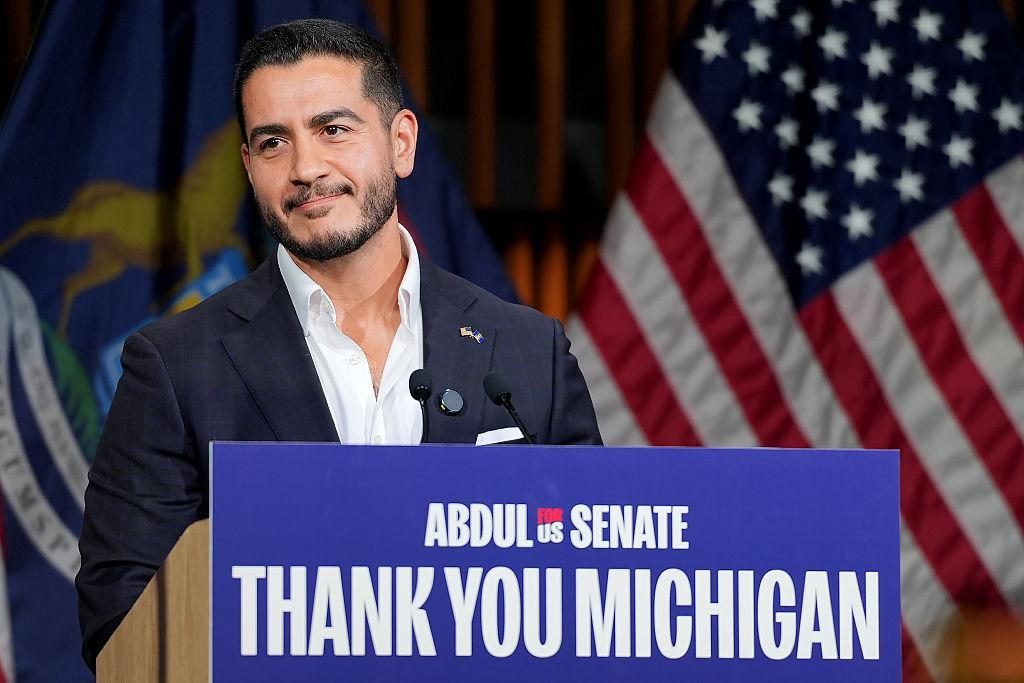
President Donald Trump has praised Michigan Senator-elect Abdul El-Sayed as a “smart guy” and expressed interest in meeting him to discuss a proposed universal healthcare system that could carry the president’s name.
Trump’s comments mark a surprising change in tone after months of political hostility between the Republican president and the Democratic politician, who recently won Michigan’s closely watched US Senate election.
In an interview with the New York Post at the White House on Tuesday, November 24, Trump spoke positively about El-Sayed’s proposal to rename the Medicare for All healthcare plan “TrumpCare.”
“He’s a smart guy,” Trump said when asked about the proposal. He also praised El-Sayed’s political approach, saying, “He did a good job. He actually did a very good job.”
Trump went further by indicating that he expected to meet the incoming senator.
“I know I’ll be meeting with him,” the president said, adding, “Maybe there’s some place in the middle that we could go.”
The president did not announce a specific date, location or agenda for the proposed meeting. The White House also did not provide further details about when the discussion might happen.
Nevertheless, Trump’s remarks have attracted considerable attention because they suggest a possible opening for cooperation between two politicians who were recently on opposite sides of a bitter election campaign.
At the center of the discussion is El-Sayed’s proposal to provide healthcare coverage to all Americans through a government-supported insurance program.
El-Sayed, a physician and former director of the Detroit Health Department, made universal healthcare a major part of his political campaign. His proposal is based on the idea that access to medical care should not depend on a person’s employment, income or family circumstances.
He has supported a Medicare for All-style system that would extend public health insurance coverage beyond its current eligibility groups.
Under the broader concept, Americans would be able to receive medical treatment without losing coverage because they changed jobs, became unemployed, got married, divorced or reached a particular age.
The proposal would cover essential medical services, including doctor visits, prescription medicines and emergency treatment. It would also seek to reduce the financial burden created by insurance premiums, deductibles and copayments.
However, the plan has not become law, and important questions remain about its final structure, cost and financing.
El-Sayed has used an unusual political strategy to attract Trump’s attention. Instead of asking the president to support a proposal carrying the name of a Democratic leader, he suggested putting Trump’s name on the healthcare program.
Earlier in November, El-Sayed publicly introduced the idea of calling the proposal “TrumpCare.”
On November 12, he shared a mock-up of a gold-colored healthcare insurance card bearing Trump’s name and signature on the social media platform X.
He accompanied the image with a direct message to the president, offering him an opportunity to guarantee healthcare coverage for every American, from childhood through old age.
The proposal was designed to appeal to Trump’s well-known interest in attaching his name to major projects and institutions.
El-Sayed’s message was straightforward: if giving the president credit and naming rights could help secure universal healthcare, he would be willing to accept that arrangement.
Trump later reshared El-Sayed’s post on his Truth Social platform. Although the president initially offered no detailed explanation, the repost drew attention to the possibility of a conversation between the two.
El-Sayed also addressed Trump in a video posted on November 17, using the Arabic word “habibi,” an expression of affection, while encouraging him to support the idea.
He argued that the president could make healthcare available to all Americans and put his name on the achievement.
The proposal received a mixed response from Washington.
A White House spokesperson initially dismissed the idea, describing it as a socialist government takeover of healthcare and using the phrase “Medicare for none.”
That response showed that Trump’s positive comments do not necessarily represent an official endorsement of El-Sayed’s healthcare plan.
However, the president’s latest remarks have raised expectations that the two sides could at least explore areas of common ground.
El-Sayed has also made clear that the name of the program is not his main concern.
During an appearance on NBC’s “Meet the Press,” he said that he was interested in ensuring Americans received guaranteed healthcare, rather than winning an argument over what the program should be called.
He indicated that Trump had shown openness to discussing the opportunity.
El-Sayed has also said that the goal of winning an election should be to use the position to deliver meaningful results for the public.
His approach reflects a willingness to negotiate with political opponents when he believes cooperation could advance his policy priorities.
The possible meeting comes after an especially hostile election campaign in Michigan.
Trump repeatedly criticized El-Sayed during the campaign and questioned his loyalty to the United States. At an October 25 rally in Port Huron, Michigan, Trump described him as a member of the Muslim Brotherhood and used the term “jihadist.”
There is no established evidence that El-Sayed belongs to the Muslim Brotherhood. El-Sayed has denied any such affiliation, and Democrats criticized Trump’s statements as attacks on his Muslim faith and Egyptian heritage.
El-Sayed also strongly criticized Trump during the campaign, making the political relationship between the two particularly tense.
Despite those disagreements, El-Sayed won the Michigan Senate race against Republican candidate Mike Rogers.
His victory made him the first Muslim elected to serve in the United States Senate, according to reports on the election. He is expected to take office when the new Congress begins in January 2027.
His victory also comes as Democrats prepare to take control of both chambers of Congress following the November 3 midterm elections.
That political change is important to understanding Trump’s interest in negotiations.
With Democrats preparing to hold congressional majorities, the president could face greater difficulty advancing his legislative priorities without cooperation from the opposing party.
Trump has already indicated that he may veto legislation he considers unacceptable. He has also suggested that negotiations could eventually produce agreements on healthcare and other national issues.
In his New York Post interview, Trump said that he expected disagreements with the incoming Democratic majorities but believed the two sides could eventually reach agreements.
He suggested that healthcare could become one area where Republicans and Democrats might work together.
The political situation gives El-Sayed an opportunity to push his healthcare agenda at a national level. However, it also creates significant challenges.
Universal healthcare has been debated in the United States for decades. Supporters argue that a government-backed system could reduce the number of uninsured people, lower medical costs for families and make healthcare available regardless of employment.
Critics, particularly among Republicans, question the financial cost, the potential impact on private insurance companies and the role of the federal government in managing healthcare.
The existing American healthcare system is a combination of private insurance, employer-sponsored coverage and public programs.
Medicare primarily serves people aged 65 and older, as well as certain younger people with disabilities. Medicaid provides health coverage for eligible low-income individuals and families.
The Affordable Care Act, commonly known as Obamacare, expanded access to insurance through marketplaces and other provisions, but it did not establish universal government-funded coverage.
According to information cited by Al Jazeera from the US Census Bureau, 26.7 million Americans, or 7.9 percent of the population, were uninsured throughout 2025.
Healthcare costs also remain a major concern for American families. Even people with insurance can face substantial deductibles, prescription drug expenses and other out-of-pocket costs.
El-Sayed argues that a universal system could address these problems by providing continuous coverage throughout a person’s life.
However, expanding Medicare-style coverage to the entire population would require major changes to the current system and a detailed funding plan.
The Congressional Budget Office and other policy researchers have previously examined different single-payer healthcare proposals. Their analyses show that the federal government’s spending could rise substantially, although the overall financial impact would also depend on changes in private insurance spending, taxes and out-of-pocket costs.
This means that the proposal would require extensive negotiations before it could become a practical legislative plan.
Another important question is whether Trump would support the full Medicare for All approach or only selected healthcare reforms.
Political analysts have cautioned against assuming that Trump’s positive comments mean he has accepted the proposal.
The president has previously opposed Medicare for All and has criticized government-run healthcare programs. His latest remarks could indicate an interest in negotiation, but they do not establish agreement on the policy itself.
There may be room for discussions about narrower measures, such as reducing prescription drug prices, expanding insurance access or restoring assistance for people purchasing health insurance through Affordable Care Act marketplaces.
El-Sayed has also discussed several possible healthcare priorities, including lowering the Medicare eligibility age, ending Medicaid work requirements and extending Medicaid coverage to children.
Those proposals could become subjects of discussion if the meeting takes place.
The political significance of the exchange also extends beyond healthcare.
Some newly elected Democratic politicians are exploring ways to work with Trump despite having campaigned against him.
New York City Mayor Zohran Mamdani has also demonstrated that political disagreements do not necessarily prevent direct discussions with the president.
El-Sayed’s approach appears to follow a similar strategy: find an issue that could benefit ordinary Americans and offer Trump an opportunity to claim a political achievement.
Vice President JD Vance’s office has also reportedly contacted El-Sayed’s team about arranging a meeting, according to reporting cited by Al Jazeera.
However, the timing and details of any such meeting have not been publicly confirmed.
For now, the most important development is Trump’s public willingness to meet with a Democrat he previously attacked during the election campaign.
Whether that willingness produces meaningful healthcare reform remains uncertain.
El-Sayed’s proposal would require support from lawmakers, negotiations over funding and agreement on how a new system would operate alongside existing private insurance and public healthcare programs.
Trump’s comments have created an opening for a conversation, but a conversation is not the same as a policy agreement.
For millions of Americans struggling with medical bills and insurance costs, the real test will be whether political negotiations can produce affordable and reliable healthcare coverage.
If the proposed meeting takes place, it could become an important moment in the national debate over healthcare reform.
For El-Sayed, the priority is clear: he wants every American to have access to healthcare, even if the program ultimately carries the name of a president who was once his strongest political opponent.
Related News

Trump Declares November 26 a National Day of Thanksgiving
New York Mayor Zohran Mamdani Unveils Plan to Close Notorious Rikers Island Jail by 2032

Former Monk Becomes NYPD Inspector, Bringing Buddhist Values of Compassion Into Policing
Comments 0
Log in or create a free account to join the conversation. You can comment anonymously.
No comments yet. Be the first.