

Bank Panic Fears Grow as Rubio Faces Tough Questions Without Giving Americans Clear Reassurance
As concerns grow over recent technology disruptions in the United States, Marco Rubio faces questions about a possible bank run. His response offers no direct reassurance, as he acknowledges public fear and uncertainty while insisting the incidents are unrelated.

International Broadcast Journalist · CSB News USA
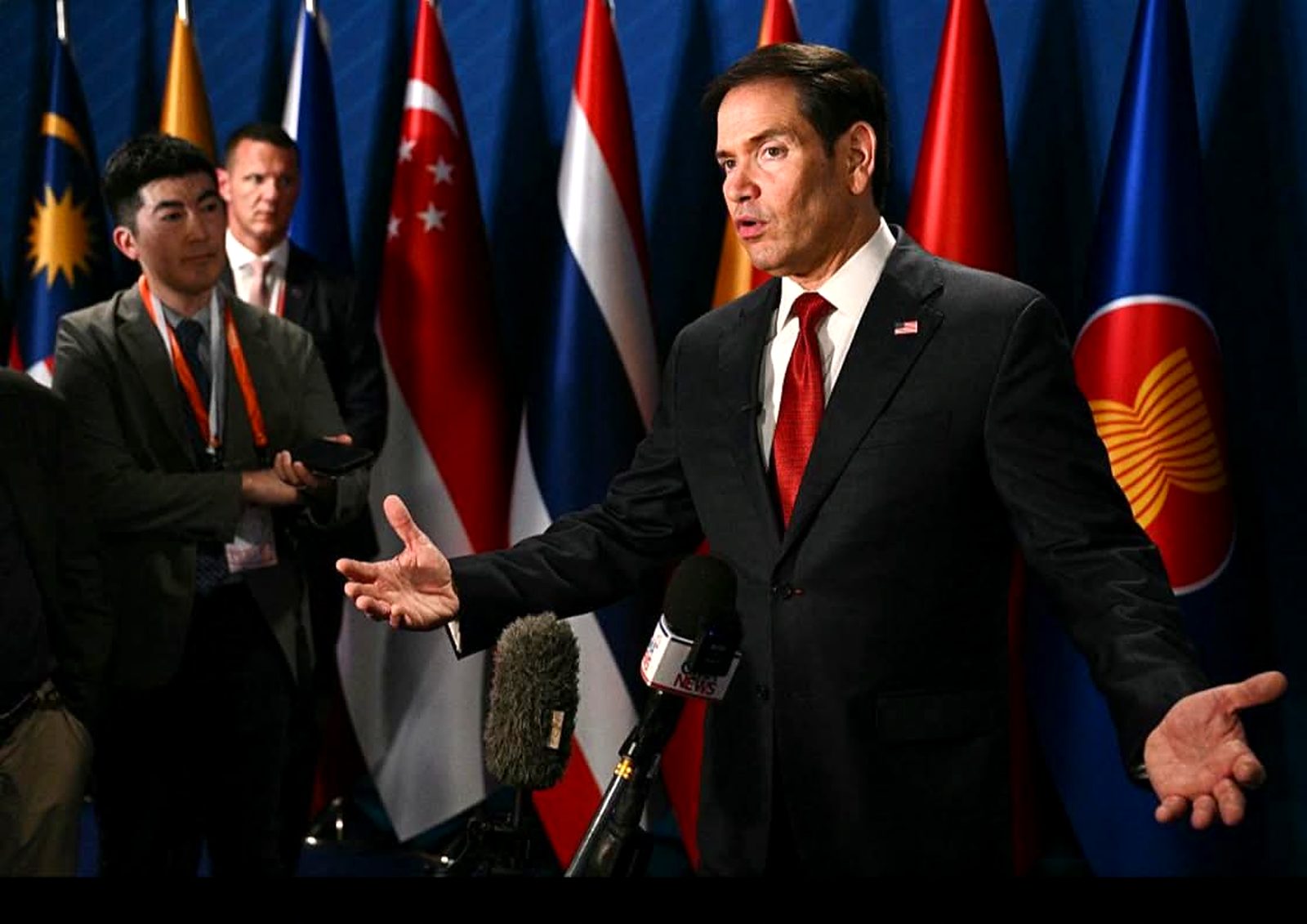
U.S. Secretary of State Marco Rubio has faced questions about whether a series of technology disruptions across the United States could trigger public panic and lead Americans to withdraw money from banks. Speaking to reporters in Manila, Philippines, on November 17, 2026, Rubio acknowledged growing public anxiety but did not directly answer whether the administration was concerned about a potential bank run.
Instead, he emphasized that the government had found no evidence connecting the recent disruptions or indicating that they were caused by cybercriminals, foreign governments or other hostile actors.
The exchange came after a journalist asked whether the Trump administration was concerned that Americans might begin stockpiling supplies or rushing to banks to withdraw their money. The question specifically raised the possibility of a bank run, a situation in which large numbers of customers attempt to withdraw their deposits simultaneously because they fear a financial institution could fail.
Rubio responded that he was not there to address a bank run but to discuss the fear and uncertainty people were experiencing. He acknowledged that repeated reports of technical failures were unsettling and said the administration understood why Americans were asking questions.
He also delivered a firm message about national security, stating that the United States was not under a systemic attack. According to Rubio, the available information showed that the incidents were separate and unrelated.
In remarks released by the State Department, Rubio said there was no evidence or indication that the Microsoft disruption, the Federal Aviation Administration’s problems and the banking service interruptions were connected. He also said officials had no reason to believe the individual incidents involved hackers, criminals, another country or other hostile actors.
The comments followed a series of technology failures affecting important services across the country. The disruptions have affected workplace communications, air travel, banking operations, airline systems and government networks, raising questions about the reliability of the country’s increasingly interconnected digital infrastructure.
One of the first major incidents involved Microsoft services, including widely used workplace and email tools. The disruption affected people and organizations that depend on Microsoft’s digital platforms for daily operations. Microsoft attributed the problem to a technical issue involving an earlier network capacity upgrade and said it was not related to a cyberattack or artificial intelligence.
The following day, the Federal Aviation Administration ordered a nationwide ground stop after experiencing problems with its air traffic control systems. The suspension lasted approximately four and a half hours, according to Reuters. Thousands of flights experienced delays and cancellations, creating significant disruption for passengers and airlines.
Transportation officials attributed the aviation problem to technical difficulties involving the country’s air traffic control infrastructure. The incident renewed concerns about aging equipment and the need to modernize systems responsible for safely managing American airspace.
Banking services also experienced difficulties on Monday. JPMorgan Chase reported a software problem that affected some customer services. Customers reported trouble accessing account information and delays involving certain transactions. Other customers also reported difficulties involving banking services and the Zelle money transfer network.
JPMorgan Chase attributed the disruption to a software bug involving its internal hardware systems and said there was no evidence that the problem was cyber-related.
It is important to distinguish between temporary banking service interruptions and an actual financial crisis. A customer being unable to access an online account for a period of time does not automatically mean that the bank has lost money, become insolvent or is unable to meet its financial obligations.
The situation also affected United Airlines, which reported a technology failure that delayed approximately 150 flights on Monday. The airline subsequently said the problem had been resolved.
On Tuesday, Apple reported problems affecting some of its services, including iCloud and Apple Pay. The company attributed the disruption to an internal update and said it was not caused by a cyberattack.
The National Security Agency also experienced a temporary degradation of its internal network during routine maintenance. However, the agency said its mission-critical capabilities remained operational.
The timing of these incidents has attracted attention from lawmakers, cybersecurity specialists and political commentators. Some have questioned whether the repeated disruptions could be connected, while others have demanded greater transparency from the administration.
Republican Senator Josh Hawley questioned the apparent coincidence of multiple failures occurring within a short period. His comments reflected growing frustration among some lawmakers who want more detailed explanations about the reliability of critical American systems.
Democratic Senator Mark Warner, a senior figure on the Senate Intelligence Committee, also addressed the situation. He said there was no indication that the incidents resulted from a cyberattack, foreign interference or a coordinated effort.
Warner suggested that rapid efforts to identify and repair security vulnerabilities could place additional pressure on systems that were not designed to handle such frequent changes. He also highlighted the challenges created by increasingly complex digital infrastructure.
President Donald Trump previously dismissed concerns about the disruptions while speaking in Manila. He said that technical problems could happen in a large and powerful country and described the situation as manageable.
However, Rubio adopted a more detailed approach, acknowledging that the repeated failures were unsettling while emphasizing that the government had found no evidence of a coordinated attack.
His response to the bank-run question has nevertheless attracted attention because he did not provide the direct reassurance that some Americans might have expected. He neither confirmed that the administration anticipated a bank run nor explicitly ruled out concern about public withdrawals.
A bank run can create serious problems when customers lose confidence in a financial institution and attempt to withdraw deposits at the same time. Even a financially healthy bank can face liquidity pressure if an unusually large number of customers demand immediate access to their money.
However, there is currently no verified evidence from the reported incidents establishing that Americans are engaging in widespread panic withdrawals or that a nationwide bank run is underway.
The Federal Deposit Insurance Corporation provides deposit insurance for eligible deposits at insured banks, subject to applicable coverage limits and ownership rules. This protection is an important part of the American banking system and is designed to help maintain public confidence.
Financial experts generally advise customers to rely on official bank communications and verified government information rather than unsubstantiated claims circulating on social media.
The broader issue raised by the recent disruptions is the growing dependence of everyday American life on interconnected technology. Banking, transportation, government operations and workplace communications increasingly rely on digital systems. Failures in these systems can affect millions of people even when the underlying problems are unrelated.
For now, the Trump administration maintains that there is no evidence linking the recent incidents or showing that they were caused by hostile actors. The public’s concerns, however, have placed renewed attention on the reliability of critical infrastructure and the government’s responsibility to communicate clearly during periods of uncertainty.
Rubio’s central message was that Americans should not interpret separate technical failures as proof of a coordinated attack. But his response to the bank-run question has left an important distinction: acknowledging public anxiety is not the same as confirming a banking crisis, and the available evidence does not establish that such a crisis is taking place.
Related News

Colorado Judge Says ICE Made a Mockery of Court Orders After Re-Arresting Released Immigrant
Homeland Security Secretary Faces Tough Questions Over Immigration-Related Deaths
US Treasury Secretary Scott Bessent Moves to Military Base After Iran-Linked Threats

Comments 0
Log in or create a free account to join the conversation. You can comment anonymously.
No comments yet. Be the first.