
Energy Watch: Bangladesh’s Coal Turn a Bad Sign for LNG
Oil prices strengthened again on Thursday after China suspended exports of oil products for October in an effort to bolster domestic inventories. The move could further tighten already-constrained global fuel markets, coming as China begins its Golden Week holiday, one of the country’s busiest travel periods of the year

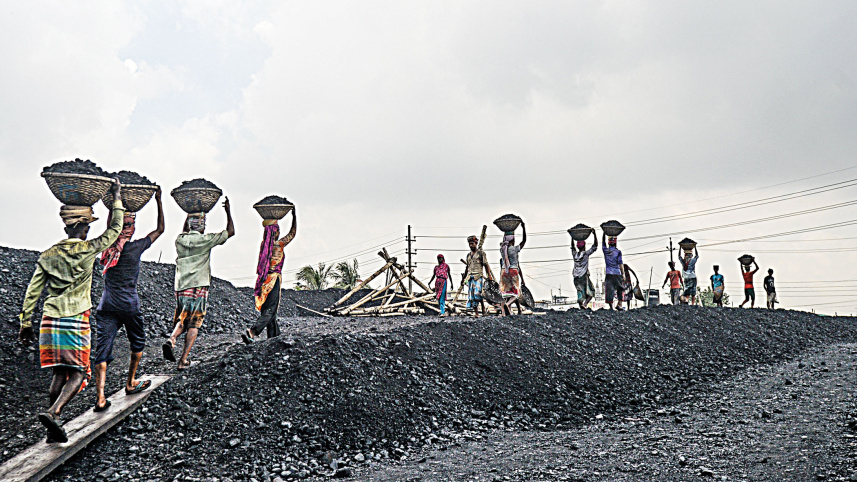
Energy Watch: Bangladesh’s Coal Turn a Bad Sign for LNG
অবশ্যই। নিচে উপরের বাংলা অনুবাদটিকে স্বাভাবিক, পেশাদার ও প্রuters-st
Oil prices strengthened again on Thursday after China suspended exports of oil products for October in an effort to bolster domestic inventories. The move could further tighten already-constrained global fuel markets, coming as China begins its Golden Week holiday, one of the country’s busiest travel periods of the year.
Participants in the crude oil market are also seeking greater clarity on tanker traffic out of the Gulf and the progress of any potential peace talks between the United States and Iran. Attention is also focused on the upcoming OPEC+ meeting on Sunday, although the group is widely expected to keep its November production targets unchanged.
The prolonged disruption to global oil and fuel flows caused by the conflict with Iran has prompted oil analysts to raise their average 2026 Brent crude price forecast to $89.05 a barrel. However, there are signs that oil export flows from the Middle East are gradually improving.
In the natural gas market, attention remains focused largely on European inventory levels. Gas stocks remain well below the long-term average for this time of year and will need to be replenished before winter begins.
That situation could support U.S. LNG sales in the near term. However, a disappointing development in Bangladesh’s power-generation mix could raise longer-term concerns for LNG exporters. Bangladesh had previously been viewed as a potentially important growth market for liquefied natural gas.
Reuters has examined the issue in greater detail in its latest analysis.
Other Energy Developments
U.S. urges France and Germany to release diesel stocks:
The Trump administration has urged France and Germany to draw down emergency diesel inventories to help ease global fuel prices. Three people familiar with the discussions said the two countries could face a potential U.S. diesel export ban if they fail to do so.
China’s commodity imports reveal a complex energy transition:
China’s commodity import data indicate that its economy is becoming increasingly electrified and more manufacturing-intensive while becoming less dependent on oil. At the same time, significant parts of the traditional energy system remain firmly in place. The result is an energy transition that is clearly underway but appears considerably more complex than many conventional narratives suggest.
Chinese refiners suspend October fuel exports:
Chinese refineries have suspended oil-product exports for October as Beijing seeks to preserve domestic fuel inventories. Four people briefed on the matter provided the information.
UAE’s Fujairah restores fuel oil supplies:
Fuel oil supplies at Fujairah in the United Arab Emirates have increased in recent months, allowing the port to resume ship-refuelling operations and boost exports to Asia. The development is based on information from industry sources and shipping data.
Alternative capital supports the next wave of U.S. LNG projects:
Alternative asset managers are increasingly using capital from their insurance businesses to finance U.S. energy infrastructure. They are emerging as major backers of LNG export projects as well as pipelines transporting crude oil and natural gas across the United States.
Asia’s seaborne thermal coal market is slowly shrinking:
Asia’s seaborne thermal coal market is gradually contracting. Demand is expected to decline modestly in the coming years, while supply is also likely to decrease at a similarly slow pace. The market therefore appears to be undergoing a very gradual adjustment rather than a sharp decline.
U.S. developer expands solar power projects:
U.S. power developer Exus Renewables has acquired four large-scale solar projects in Louisiana and Wisconsin from ibV Energy Partners. The company is also in talks with potential data-center customers interested in purchasing electricity from the projects.
South Korea plans $200 billion investment in U.S. projects:
U.S. President Donald Trump announced that South Korea plans to invest $200 billion in U.S. projects. The investment includes $54 billion for the long-planned Alaska LNG project.
About the author:
Gavin Maguire is Reuters’ Global Energy Transition Columnist. He previously served as Asia Commodities and Energy Editor.
Editorial note: The article is part of Reuters’ Commentary/Reuters Open Interest section. The views expressed are those of the author and do not necessarily reflect the views of Reuters’ news division.