France School Protests Escalate as Students Demand More Teachers, Smaller Classes and Better Facilities
France is facing a growing wave of student protests as thousands demand more teachers, smaller classes and better school facilities. More than 5,000 people have reportedly been arrested, while dozens of school staff have been injured as demonstrations spread across the country.
.jpeg )
France School Protests Escalate as Students Demand More Teachers, Smaller Classes and Better Facilities
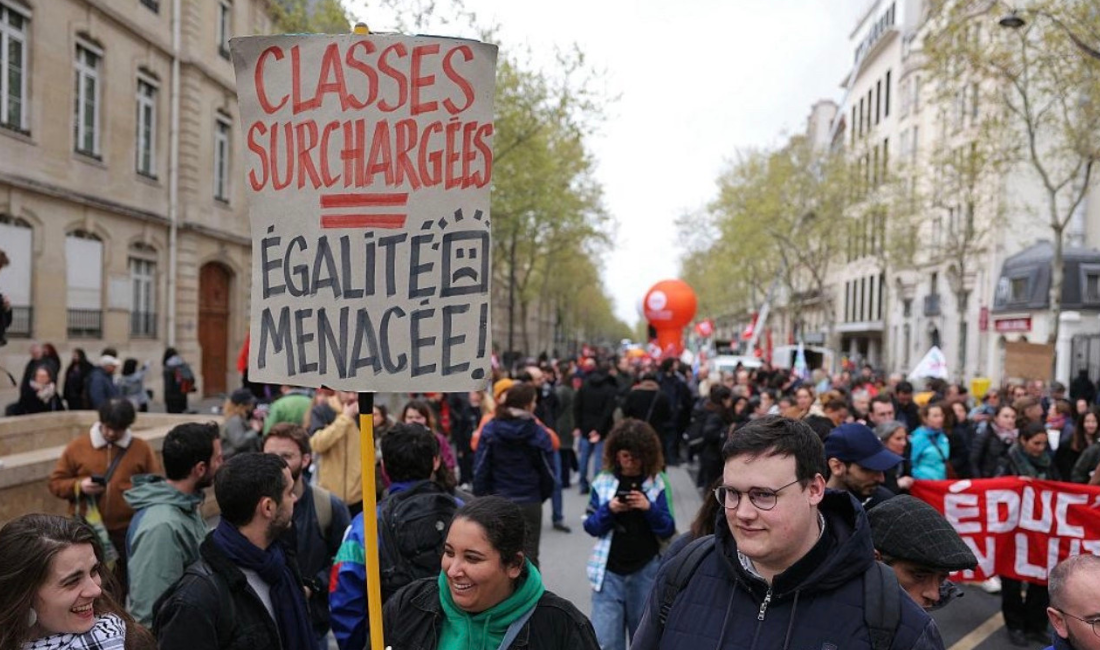
France is facing a growing wave of student protests over teacher shortages, overcrowded classrooms, poor school facilities and concerns about education funding. What began in schools in the poorer suburbs of Paris has spread across the country, with more than 1,200 schools reportedly affected during the week.
The protests have brought thousands of students onto the streets and resulted in large numbers of arrests as demonstrations in several cities turned violent. French authorities said 1,747 people were arrested on Friday alone, bringing the total number of arrests during the week to more than 5,000.
Students say their main concerns are straightforward: they want enough teachers, smaller classes, functioning school buildings and qualified substitutes when teachers are absent.
The movement initially gained momentum in the Paris region, particularly in Seine-Saint-Denis, one of the country’s poorer departments. Students there say their schools have struggled for years with teacher shortages, overcrowded classrooms and inadequate facilities.
One of the most common complaints is the lack of replacement teachers. When a teacher is absent because of illness or another reason, students can sometimes go days or even weeks without regular classes. Students and parents argue that this directly affects academic performance, particularly for teenagers preparing for important examinations.
Overcrowding is another major issue. Some classrooms have more than 35 students, making it difficult for teachers to provide individual attention. Students also complain about a lack of adequate seating, poor ventilation and uncomfortable conditions during periods of extreme heat.
The condition of some school buildings has added to the frustration. Students and teachers have reported problems including water leaks, damaged facilities, poor maintenance and inadequate sanitary conditions. Protesters argue that students in poorer communities should not have to study in significantly worse conditions than those in wealthier parts of France.
Education funding has become another major point of contention. The French government has proposed increasing education spending by around 1.7 percent, taking the planned education budget to approximately €65.5 billion. Critics argue that the increase remains below the rate of inflation and does not adequately address the scale of the problems facing schools.
Teacher numbers have also become a politically sensitive issue. Unions and education workers have criticized reductions in teaching positions and warned that staff shortages are already putting additional pressure on schools.
As the protests spread, some demonstrations became increasingly confrontational. In several cities, students blocked school entrances, set fire to rubbish and threw objects toward police. Some schools were damaged, while emergency services were called to deal with fires and other disturbances.
Police responded with tear gas and rubber bullets in some locations. Authorities said officers were targeted with objects, fireworks and other projectiles. Protesters, however, accused police of using excessive force during some demonstrations.
The violence has also affected school employees. French education officials said at least 65 education workers had been injured during the unrest, including around 40 school principals. A larger number of students were also reportedly injured.
There have been reports of incidents involving petrol and fires near schools. However, some details circulating on social media appear to have been exaggerated or presented without sufficient context. One reported incident involved petrol being thrown near a school, with several teachers coming into contact with the substance. It is therefore important not to describe every such incident as a deliberate attack on a school principal without verified evidence.
French authorities have attempted to separate the students’ legitimate education concerns from acts of violence. Government officials have blamed what they describe as a violent fringe for escalating the unrest.
Officials have also accused the left-wing political movement France Unbowed of attempting to exploit the protests for political purposes. The party has rejected the accusation and argued that the government is trying to shift attention away from the underlying problems in the education system.
The protests have attracted students, teachers, parents and political activists with different motivations, making it difficult to characterize the entire movement as being controlled by a single political group.
For many students, however, the central issue remains education rather than politics.
They want schools where teachers are available, classes are manageable in size and buildings are safe and properly maintained. They also want absent teachers to be replaced quickly so that their education does not suffer.
The government is now under pressure to address both the security situation and the underlying education crisis. Authorities have promised to engage with students and education workers while taking steps to restore order at schools affected by demonstrations.
Some schools have temporarily switched to remote learning because of blockades or damage. Officials are also looking at ways to provide substitute teachers and improve the functioning of schools.
The situation presents a difficult challenge for the French government. A purely security-focused response could deepen students’ frustration, while failing to respond firmly to violence could put teachers, students, police officers and members of the public at greater risk.
The protests have therefore developed into a wider debate about France’s education system, public spending and inequality.
The fact that the movement began in poorer suburbs has also highlighted long-standing concerns about unequal educational opportunities. Students and parents in disadvantaged communities argue that they deserve the same quality of education and facilities available elsewhere in the country.
The coming days are likely to be crucial. If the government can open meaningful negotiations with students, teachers and parents and provide concrete solutions to teacher shortages and school conditions, tensions could begin to ease.
But if the problems remain unresolved, the protests could continue to expand.
What started as a dispute over missing teachers and school conditions has now become a much broader national debate about the future of education in France, the allocation of public resources and the opportunities available to young people.
The protests have also demonstrated the growing frustration among French students who believe that problems inside their schools are directly affecting their education and future prospects.
For the government, the challenge is now clear: restore calm while addressing the problems that brought thousands of students onto the streets in the first place.