AI and Human Intelligence Shape Future Tourism at IUBAT World Tourism Day 2026
IUBAT marks World Tourism Day 2026 by exploring artificial intelligence, sustainable tourism, digital transformation and the continuing importance of human intelligence.

AI and Human Intelligence Shape Future Tourism at IUBAT World Tourism Day 2026
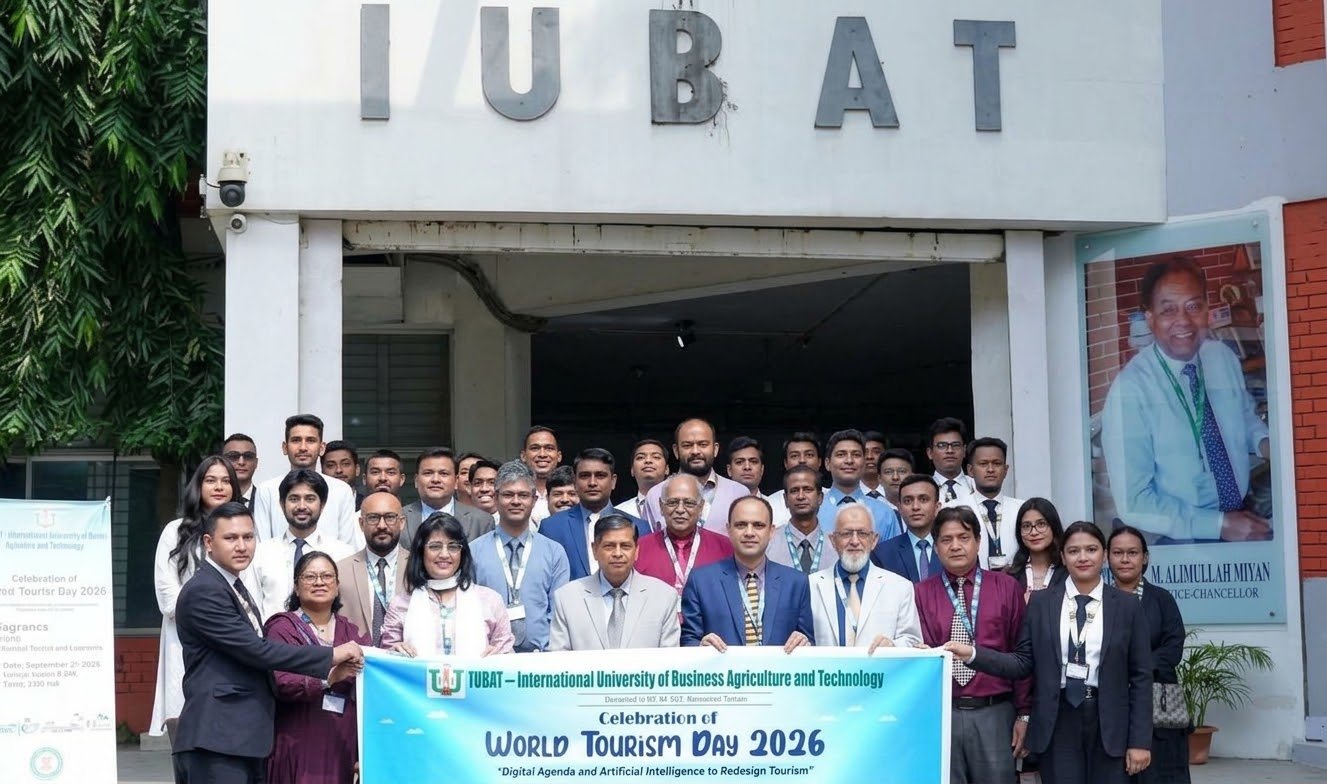
The College of Tourism and Hospitality Management at the International University of Business Agriculture and Technology observed World Tourism Day 2026 with a programme focusing on the growing role of artificial intelligence, digital transformation and sustainable tourism.
The programme was held on September 27 at the IUBAT campus in Dhaka under the international theme “Digital Agenda and Artificial Intelligence to Redesign Tourism.” Students, faculty members, university authorities and professionals from leading hotels and airlines joined the programme to discuss how technology is changing the tourism and hospitality industry and what skills future professionals will need.
The programme began with a student rally on the university campus. A large number of students took part in the rally, which also highlighted environmental awareness and the importance of responsible and sustainable tourism.
The organisers connected technological development with environmental responsibility, stressing that the future of tourism cannot depend only on digital innovation. Tourism development also needs to protect natural resources, respect local communities and preserve destinations for future generations.
The main event was a roundtable discussion that brought together academic leaders and professionals from the tourism and hospitality industry. The academic participants included IUBAT Vice Chancellor Professor Dr Abdur Rab, Treasurer and Director of Administration Professor Selina Nargis, and Chairman of the College of Tourism and Hospitality Management Dr Mohammad Badruddoza Talukder.
Representatives from the tourism and hospitality industry also took part in the discussion. They included T Kevin McIntyre, General Manager of Hyatt Place Dhaka Uttara; Islam Gure, General Manager of Turkish Airlines Dhaka; Romano Kreutz, Cluster Director of Culinary at Crowne Plaza Dhaka Airport; Nazmul Huda, Cluster Director of Human Resources at Crowne Plaza Dhaka Airport and InterContinental Dhaka; Saiful Alam, Associate Director of Sales at InterContinental Dhaka; and Md Farhad Hossain Mozumder, Manager of Sales and Marketing at Hyatt Place Dhaka Uttara.
The participation of professionals from hotels, airlines, human resources, sales, marketing and culinary operations gave students an opportunity to hear directly from people working in different parts of the tourism and hospitality industry.
A major focus of the discussion was the increasing use of artificial intelligence in tourism. Participants discussed how artificial intelligence can support hotel recommendations, digital check-in, guest communication, demand forecasting, revenue management, food cost control, food waste reduction, airline customer services, predictive maintenance and airport passenger-flow management.
Artificial intelligence can also help tourism destinations analyse visitor movements and identify periods of high congestion. Such information can support better planning, improve the allocation of resources and help destination managers develop more sustainable tourism systems.
Technology can also help tourism businesses understand customer preferences more efficiently. By analysing large amounts of information, artificial intelligence can identify patterns and provide businesses with useful insights about what travellers may want.
However, participants stressed that technology should not be viewed as a replacement for human intelligence.
Dr Mohammad Badruddoza Talukder emphasised the importance of combining artificial intelligence with human intelligence. He argued that the future of tourism should not be framed as a competition between technology and people. Instead, technology should strengthen human capabilities and help professionals provide better tourism and hospitality services.
Artificial intelligence can analyse large volumes of data, identify patterns, predict customer preferences and support business decisions. But tourism is also deeply connected to human emotions, culture, communication and personal experiences.
A computer system may identify which hotel room or travel destination a customer is likely to prefer. Human professionals, however, remain important in understanding why an experience matters to a particular traveller.
The same principle applies to hotels, airlines, airports and restaurants. Artificial intelligence can support operational efficiency, forecasting and customer service, while human professionals continue to provide empathy, creativity, cultural understanding, ethical judgement and personal interaction.
The discussion therefore focused on the idea that the future of tourism should be based on cooperation between technology and people.
The event also highlighted the importance of industry and academic cooperation. Tourism and hospitality education needs to keep pace with changes taking place in hotels, airlines, airports, restaurants, travel companies and destinations.
Industry professionals can provide students with practical knowledge about current workplace requirements, while universities can turn real-world experiences into academic learning, case studies and practical training.
This connection can help students develop skills that are relevant to the changing tourism industry.
Participants also discussed how tourism education needs to evolve as digital technologies become more common. Future tourism professionals will need knowledge of artificial intelligence, data analysis, digital platforms, sustainable tourism, customer personalisation and technology-based service management.
At the same time, technical knowledge alone will not be enough. Communication, creativity, emotional intelligence, cultural awareness, critical thinking and ethical decision-making will remain important skills for tourism and hospitality professionals.
The programme also connected artificial intelligence with sustainable tourism. Technology can potentially help destinations monitor visitor movements, reduce congestion, manage resources, control waste and improve energy efficiency.
For destinations facing pressure from increasing tourist numbers, data-based systems may help authorities understand when and where visitors are moving and develop strategies to distribute tourism activity more effectively.
Participants also stressed that digital transformation should be inclusive and responsible. Technological development should benefit travellers, businesses, employees, local communities and destinations rather than creating new forms of inequality.
The international context of World Tourism Day 2026 also places strong emphasis on the role of artificial intelligence and digital transformation in tourism. The United Nations and the United Nations Tourism organisation have highlighted the potential of artificial intelligence to change the way people select destinations, how tourism businesses operate and how travel experiences are designed.
At the same time, international discussions have stressed the importance of digital skills, accessibility, inclusion and people-centred technological development.
The IUBAT programme reflected these wider international discussions while focusing on the needs of students and the tourism industry in Bangladesh.
For students, direct interaction with senior professionals from hotels and airlines provides an opportunity to understand current industry practices and future career requirements. It also allows students to connect classroom learning with real workplace experiences.
The event demonstrated how universities can create platforms where academic knowledge and industry experience come together. Such cooperation can help prepare graduates for an industry that is increasingly influenced by technology and changing customer expectations.
The programme also highlighted that tourism remains a people-centred industry despite rapid technological development. Travellers may use digital platforms to search for destinations, compare hotels and plan journeys, but their overall experience is still influenced by human interaction, service quality, culture and hospitality.
As artificial intelligence becomes more widely used, tourism businesses will therefore need professionals who understand both technology and people.
The World Tourism Day programme at IUBAT brought these issues together through discussions involving university leaders, academics, students and industry professionals. The central message was that artificial intelligence can make tourism more efficient, personalised and data-driven, while human intelligence remains essential for meaningful and responsible tourism experiences.
The event also reinforced the importance of preparing students for a tourism industry where technology, sustainability and human skills will increasingly operate together.
With tourism entering a new phase of digital transformation, the discussions at IUBAT highlighted the need for future professionals who can use technology responsibly while maintaining the human values at the heart of hospitality.
The programme concluded with a broader message for the future of tourism: technological innovation can help make tourism smarter and more efficient, while human intelligence, sustainability and responsible practices can help ensure that tourism remains meaningful for travellers, communities and destinations.