Early Voting Begins in 2026 US Midterm Elections
In-person early voting for this year’s U.S. midterm elections begins Friday, opening the final six weeks for Americans to decide who they want to lead Congress. Voters will make their choices amid concerns over the cost of living, the prolonged war in Iran and other pressing national issues, according to The Associated Press

Early Voting Begins in 2026 US Midterm Elections
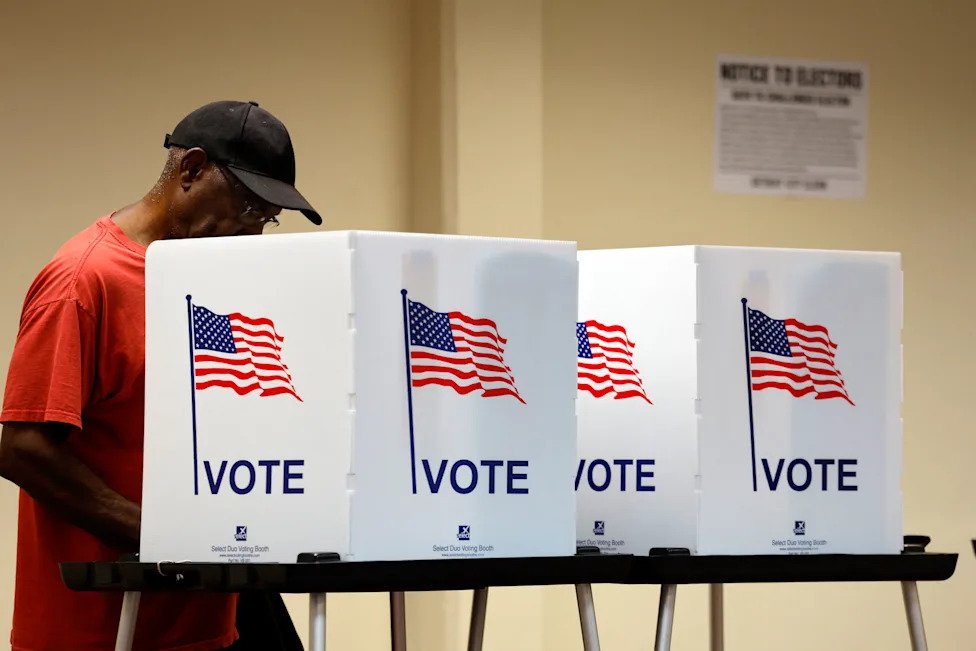
In-person early voting for this year’s U.S. midterm elections begins Friday, opening the final six weeks for Americans to decide who they want to lead Congress. Voters will make their choices amid concerns over the cost of living, the prolonged war in Iran and other pressing national issues, according to The Associated Press.
Election administrators say they are prepared and confident that the voting process will be accurate and secure. However, AP reports that President Donald Trump has continued efforts to challenge certain voting methods and reshape the way U.S. elections are administered. Those efforts include court challenges, a broad federal effort to identify alleged noncitizen voters and pressure on election officials to provide sensitive voter data.
Friday marks the beginning of early in-person voting in Virginia. In several other states, including Idaho, Minnesota and South Dakota, voters can already cast absentee ballots in person, generally at local election offices or voting centers. More extensive early voting is scheduled to begin in those states and elsewhere in the coming weeks.
The Nov. 3 election will include contests for governor and state legislatures in most states. It will also determine whether Republicans retain their majorities in the U.S. House and Senate. According to AP, if Democrats regain control of Congress, the political direction of the final two years of Trump’s term could change, with congressional investigations and oversight likely to become more prominent.
The start of early voting comes as many Americans express concerns about rising gas and grocery prices, the war in Iran, the potential risks associated with artificial intelligence and the Trump administration’s aggressive immigration enforcement campaign.
The election also follows an unprecedented wave of mid-decade congressional redistricting. AP reports that the process began after Trump urged the Republican-controlled Texas legislature to redraw its congressional map in a way intended to benefit the party. California and other states subsequently followed with their own redistricting efforts.
The changes affect millions of Americans. Research cited by The Associated Press indicates that roughly one in 10 Americans this fall lives in a different congressional district than in 2024.
Those partisan redistricting efforts are expected to continue ahead of the 2028 elections. AP reports that a landmark Supreme Court ruling this year weakened federal Voting Rights Act protections against racially discriminatory redistricting.
As early voting approached, Trump was also focused on expanding federal influence over election administration. According to AP, the U.S. Constitution gives states, and in some circumstances Congress, authority over the administration of elections. The Supreme Court this week rejected Trump’s attempt to restrict mail-in voting, although several other administration initiatives remain underway, including efforts to influence voting procedures and examine state voter lists for allegedly ineligible voters.
Trump has repeatedly raised concerns about noncitizens voting in U.S. elections. However, AP reports that while his administration has argued that hundreds of thousands of ineligible people may be included on voter rolls, research continues to find that noncitizen voting is exceptionally rare.
David Becker, executive director and founder of the Center for Election Innovation and Research, told AP that he would not be surprised if Trump continued what Becker described as a campaign challenging election officials and spreading misinformation. Becker nevertheless said he expected the election process to withstand those challenges, as it has in previous years.
Voting rights advocates are encouraging voters to cast mail ballots early, partly because of concerns about recent changes in U.S. Postal Service operations that could delay the postmarking of ballots.
Hannah Fried, co-founder and CEO of the voting rights organization All Voting Is Local, told AP that early voting, whether in person or by mail, gives voters more options, reduces lines on Election Day and can potentially contribute to faster results.
At a Thursday news briefing, Minnesota Secretary of State Steve Simon urged voters not to be influenced by reports casting doubt on election operations. He said Minnesotans would be able to vote “just like they always have.”
Simon also reaffirmed that Minnesota’s elections are free, fair, accurate, honest and secure.
Source: The Associated Press (AP).