Warren Buffett Steps Aside, Greg Abel Takes the Helm at Berkshire Hathaway
In a historic transition for global finance, Warren Buffett has formally stepped back from day-to-day leadership of Berkshire Hathaway, handing operational control to his long-designated successor, Greg Abel

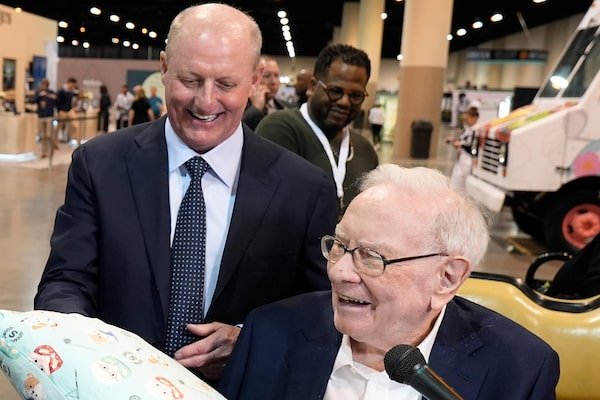
Warren Buffett Steps Aside, Greg Abel Takes the Helm at Berkshire Hathaway
In a historic transition for global finance, Warren Buffett has formally stepped back from day-to-day leadership of Berkshire Hathaway, handing operational control to his long-designated successor, Greg Abel. The move, long anticipated but still momentous, marks the end of an era defined by Buffett’s disciplined investing philosophy and signals a new chapter for one of the world’s most closely watched conglomerates.
A Carefully Managed Transition
According to a Report analysis, the transition has been years in the making. Buffett, now in his mid-90s, had already delegated significant responsibilities to Abel, particularly overseeing Berkshire’s vast non-insurance operations. Abel’s elevation is less a sudden shift and more the formalization of a structure investors have been preparing for.
Buffett will remain chairman, ensuring continuity in strategic oversight and preserving the company’s unique culture. This dual structure is designed to reassure shareholders who have long viewed Buffett as the cornerstone of Berkshire’s success.
Who is Greg Abel?
Abel, a low-profile but highly respected executive, has built his reputation managing Berkshire’s energy and utility businesses. Known for operational discipline rather than headline-making investments, he contrasts with Buffett’s larger-than-life persona but aligns closely with his conservative management style.
Analysts say Abel’s deep understanding of Berkshire’s decentralized structure makes him a natural fit. However, unlike Buffett, he is not expected to play the same outsized role in capital allocation—raising questions about how investment decisions will evolve.
Market Reaction and Investor Confidence
Despite the symbolic weight of Buffett stepping aside, markets have reacted with relative calm. This reflects confidence in Berkshire’s succession planning and the strength of its diversified portfolio, which spans insurance, railroads, energy, and consumer brands.
Still, some investors remain cautious. Buffett’s ability to identify undervalued assets and deploy capital during crises—skills honed over decades—will be difficult to replicate. Abel’s challenge will be maintaining performance without the “Buffett premium” that has long buoyed Berkshire’s stock.
Strategic Challenges Ahead
Abel inherits a company facing a more complex economic landscape: higher interest rates, geopolitical uncertainty, and evolving regulatory pressures. At the same time, Berkshire’s enormous cash reserves—often exceeding $100 billion—pose both an opportunity and a challenge in finding profitable investments.
Another key question is how Abel will shape Berkshire’s future identity. Will he maintain Buffett’s conservative approach, or gradually adapt the conglomerate to a faster-moving, technology-driven economy?
End of an Era, Start of a Test
Buffett’s step back is not just a leadership change—it’s a test of whether Berkshire Hathaway can sustain its unique model without its legendary architect at the helm.
For now, the message from Omaha is stability over disruption. But as Greg Abel takes center stage, the coming years will determine whether Berkshire’s success was built solely on Buffett’s instincts—or on a system strong enough to endure beyond him.