U.S. Justice Department appoints new immigration judges as Trump administration accelerates deportations
As arrests and deportations accelerate nationwide, the Trump administration is reshaping the U.S. immigration court system by appointing new judges—many with military backgrounds—while pushing out more than 100 others.

U.S. Justice Department appoints new immigration judges as Trump administration accelerates deportations
U.S. Justice Department Appoints New Immigration Judges as Trump Administration Pushes Deportation Drive
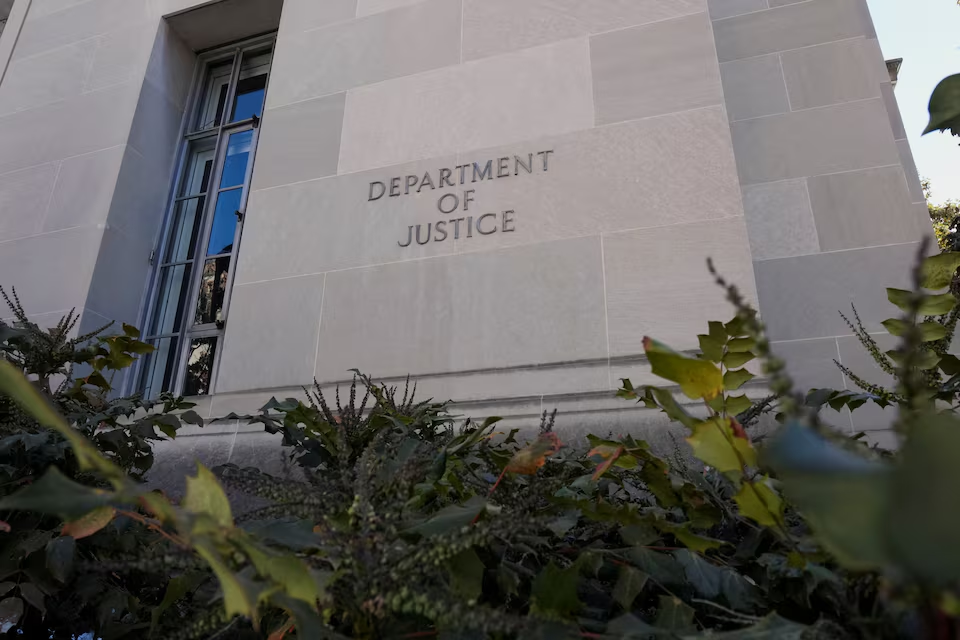
Washington, Feb 6 — The U.S. Justice Department has appointed 33 new immigration judges, including 27 temporary judges, amid a sweeping overhaul of the immigration court system under President Donald Trump’s second administration.
The new judges were sworn in on Thursday, according to the Justice Department’s Executive Office for Immigration Review (EOIR). This follows the October appointment of 36 immigration judges, many of whom were also temporary hires, after months of workforce reductions.
The judges will serve in immigration courts across 15 states, including Arizona, California, Texas, New York, Florida, Georgia, Illinois, Massachusetts, Virginia, and Washington, among others.
Mass Firings and Political Shift
Since President Trump returned to office in January 2025, more than 100 immigration judges—out of a total workforce of around 700—have been fired or forced out, according to the American Immigration Lawyers Association (AILA).
The association warned that the dismissals have severely reduced court capacity at a time when arrests and deportations are accelerating nationwide.
The Justice Department, however, defended its actions, accusing the previous Biden administration of undermining the courts.
“After four years of Biden administration hiring practices that undermined the credibility and impartiality of the immigration courts, this Department of Justice continues to restore integrity to our immigration system,” a Justice Department spokesperson said.
Military Judges in Immigration Courts
A key feature of the new appointments is their military background:
-
50% of permanent judges previously served in the military
-
100% of temporary judges are military lawyers
The Pentagon confirmed in September that military and civilian lawyers from the U.S. Defense Department, under Defense Secretary Pete Hegseth, would temporarily serve as immigration judges for up to six months.
Critics argue this move blurs the line between civil immigration law and national security enforcement.
Backlog Crisis Deepens
Immigration courts are currently facing a backlog of approximately 3.2 million cases, according to Mobile Pathways, a nonprofit that analyzes immigration court data.
Legal advocates say the backlog has worsened due to:
-
Judge firings
-
Mandatory detention policies
-
Faster deportation procedures
Under Trump, thousands of migrants who previously qualified for bond release are now subject to mandatory detention, following a September ruling by the Board of Immigration Appeals. Federal judges have criticized the ruling, saying it misinterprets immigration law.
Fast-Track Appeals Regulation
The Trump administration is set to publish a fast-track regulation on Friday that would:
-
Reduce the time to appeal an immigration judge’s decision to 10 days
-
Allow the appeals board to more easily dismiss cases without full review
Immigration advocates warn the changes could limit due process and increase the risk of wrongful deportations.