Trump Talks About Canceling Midterm Elections Amid Republican Fears
President Donald Trump has sparked controversy by suggesting the possibility of canceling the upcoming midterm elections. Concerned about potential Republican losses and his low approval ratings, his comments have raised questions about the integrity of U.S. electoral processes and the state of American democracy.

Trump Talks About Canceling Midterm Elections Amid Republican Fears
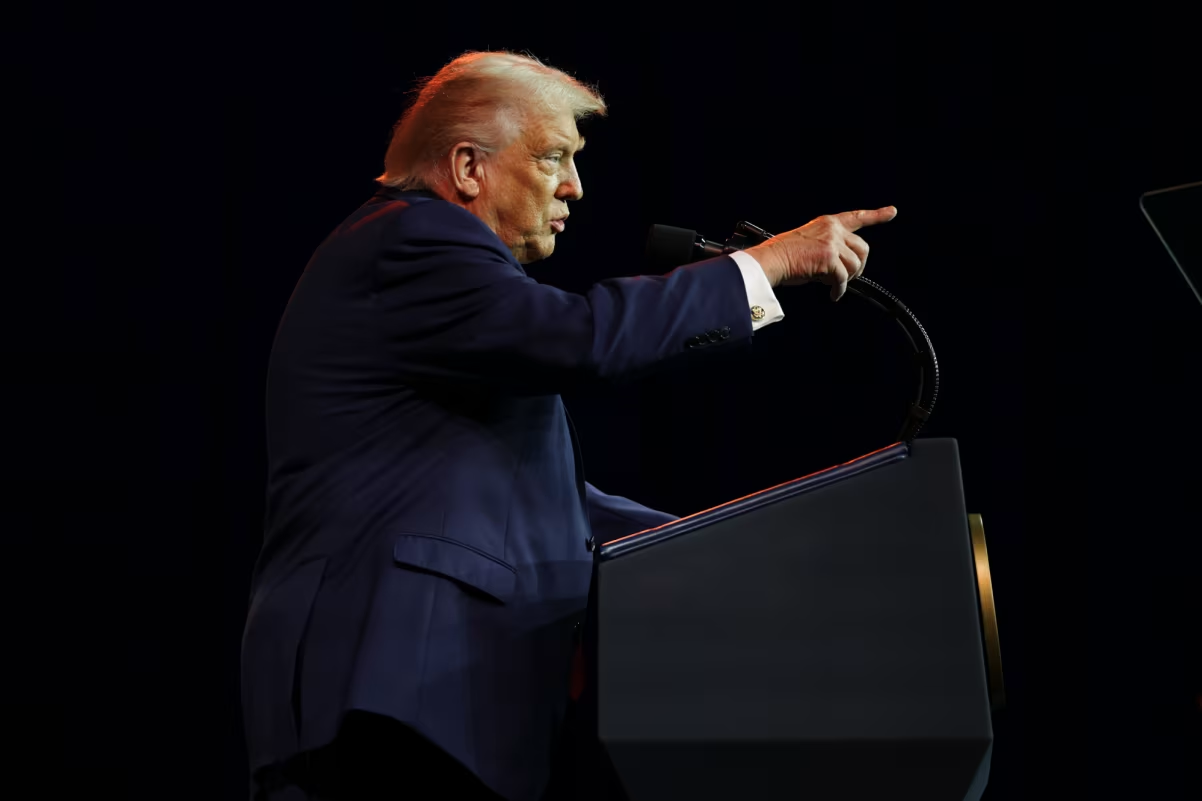
President Donald Trump has repeatedly suggested the idea of canceling the November midterm elections, expressing concern over Republicans potentially losing control of the House, Senate, or both. Speaking to House Republicans earlier this month, Trump said he doesn’t understand why his approval ratings are low and admitted: “I wish you could explain to me what the hell’s going on with the mind of the public.”
In recent remarks to Reuters, Trump said, “When you think of it, we shouldn’t even have an election,” citing the Republican Party’s successes. White House press secretary Karoline Leavitt later clarified that the president was “joking” or being “facetious” about canceling the election.
However, Trump has mentioned similar ideas before. During a September meeting with Ukrainian President Volodymyr Zelensky, he expressed envy that Ukraine could delay elections during martial law, commenting, “So you say during the war, you can’t have elections… Oh, that’s good.”
While sometimes framed as jokes, some of Trump’s statements—like owning Greenland—have been serious. Nevertheless, the U.S. has historically held elections during wars, including the War of 1812, the Civil War, and both World Wars, even when millions of Americans were fighting overseas.
Trump’s apprehension about the midterms is understandable. Historically, presidents rarely gain seats in midterms, and a loss of just a few seats could shift control of the House to Democrats, limiting Republican power and enabling investigations into his administration.
Legally, the president cannot cancel or delay elections. The Constitution mandates a new Congress be sworn in on January 3, 2027, and Election Day is set by law. While state officials can theoretically adjust elections due to disasters, there is no precedent for cancellation.
Trump has also questioned the integrity of U.S. elections. He has suggested using emergency powers to intervene and has repeatedly claimed—even in victories—that elections were rigged, despite no evidence of widespread voter fraud.
Election officials are taking precautions. Arizona Secretary of State Adrian Fontes, a Democrat, said officials are planning for multiple scenarios to protect democracy, including court interventions and law enforcement support if attempts are made to interfere with the electoral process.
Fontes added: “The fact that we’re running through these scenarios in the first place should tell you something about the health of our democracy.”