Key Takeaways from Reuters Interview with U.S. President Donald Trump
Trump acknowledged concerns that Republicans could lose control of the House or Senate in this year’s midterm elections, citing historical trends that often hurt the party in power. “It’s some deep psychological thing,” Trump said. “When you win the presidency, you don’t win the midterms.” He argued that his accomplishments should defy that pattern.

Key Takeaways from Reuters Interview with U.S. President Donald Trump
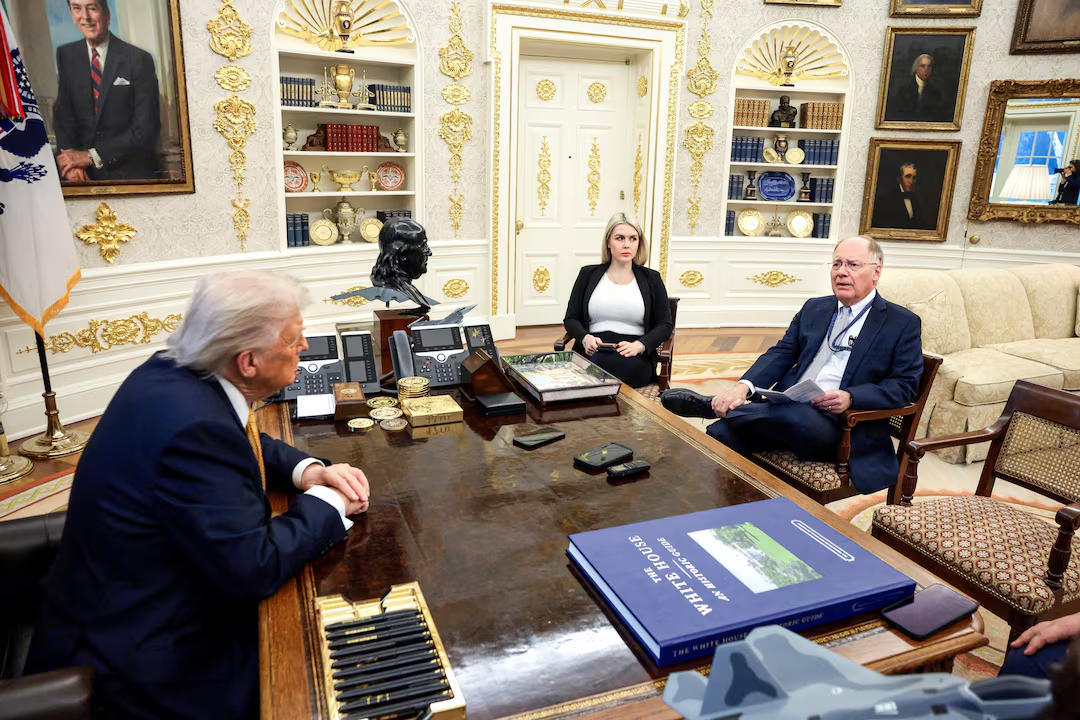
Reuters sat down with U.S. President Donald Trump for a 30-minute interview in the Oval Office on Wednesday. Below are the main takeaways from the exchange:
Trump Governs on His Own Terms
Trump repeatedly brushed aside criticism from the public, business leaders, and even members of his own Republican Party on issues ranging from Greenland to the criminal investigation into Federal Reserve Chair Jerome Powell and concerns about the economy.
When told that a Reuters/Ipsos poll showed limited public support for taking control of Greenland, Trump dismissed the survey as “fake.” Asked about Republican pushback against investigating Powell, Trump responded, “I don’t care.” He repeated the phrase when reminded of JPMorgan Chase CEO Jamie Dimon’s warning that White House interference in the Federal Reserve could harm the economy.
Addressing concerns over high prices, Trump again insisted the U.S. economy was the strongest “in history” and said he needed to do a better job promoting his achievements, pointing to a thick binder prepared by aides listing his accomplishments.
“A lot of times, you can’t convince a voter,” Trump said. “You have to just do what’s right.”
Iran: Uncertainty Continues
Earlier in the day, Trump told reporters he believed Iran’s crackdown on protesters was easing, though he declined to say how he obtained that information. In the interview, he remained vague on whether he was still considering military action against Iran.
Despite repeated threats toward Tehran, Trump stopped short of calling for regime change and declined to endorse exiled crown prince Reza Pahlavi as a potential future leader.
Peace Efforts Face Obstacles
Trump discussed his efforts to broker peace in Gaza and end Russia’s war in Ukraine, acknowledging setbacks in both.
He conceded that Hamas had not disarmed, as required under the Gaza ceasefire agreement. “They were born with a gun in the hand,” Trump said, adding that it remained uncertain whether the deal would ultimately succeed.
On Ukraine, Trump again claimed Russian President Vladimir Putin was prepared to make a deal. Asked what was preventing progress, Trump blamed Ukrainian President Volodymyr Zelenskiy, who has said Ukraine will not accept peace at any cost.
Support for ICE Operations
Trump expressed sympathy for the death of Renee Nicole Good, who was shot and killed by an ICE agent in Minneapolis last week, calling it “a very unfortunate incident.” His Homeland Security Secretary, Kristi Noem, has labeled Good a domestic terrorist.
Despite the controversy, Trump defended his decision to deploy heavily armed federal agents in U.S. cities. He said such operations had removed “thousands of murderers” from the country, a claim for which no evidence has been provided.
Midterm Election Concerns
Trump acknowledged concerns that Republicans could lose control of the House or Senate in this year’s midterm elections, citing historical trends that often hurt the party in power.
“It’s some deep psychological thing,” Trump said. “When you win the presidency, you don’t win the midterms.” He argued that his accomplishments should defy that pattern.