Voting Rights Act Faces Its Biggest Challenge Yet at U.S. Supreme Court
The U.S. Supreme Court is weighing a case that could weaken the Voting Rights Act, a key law protecting minority voting rights.

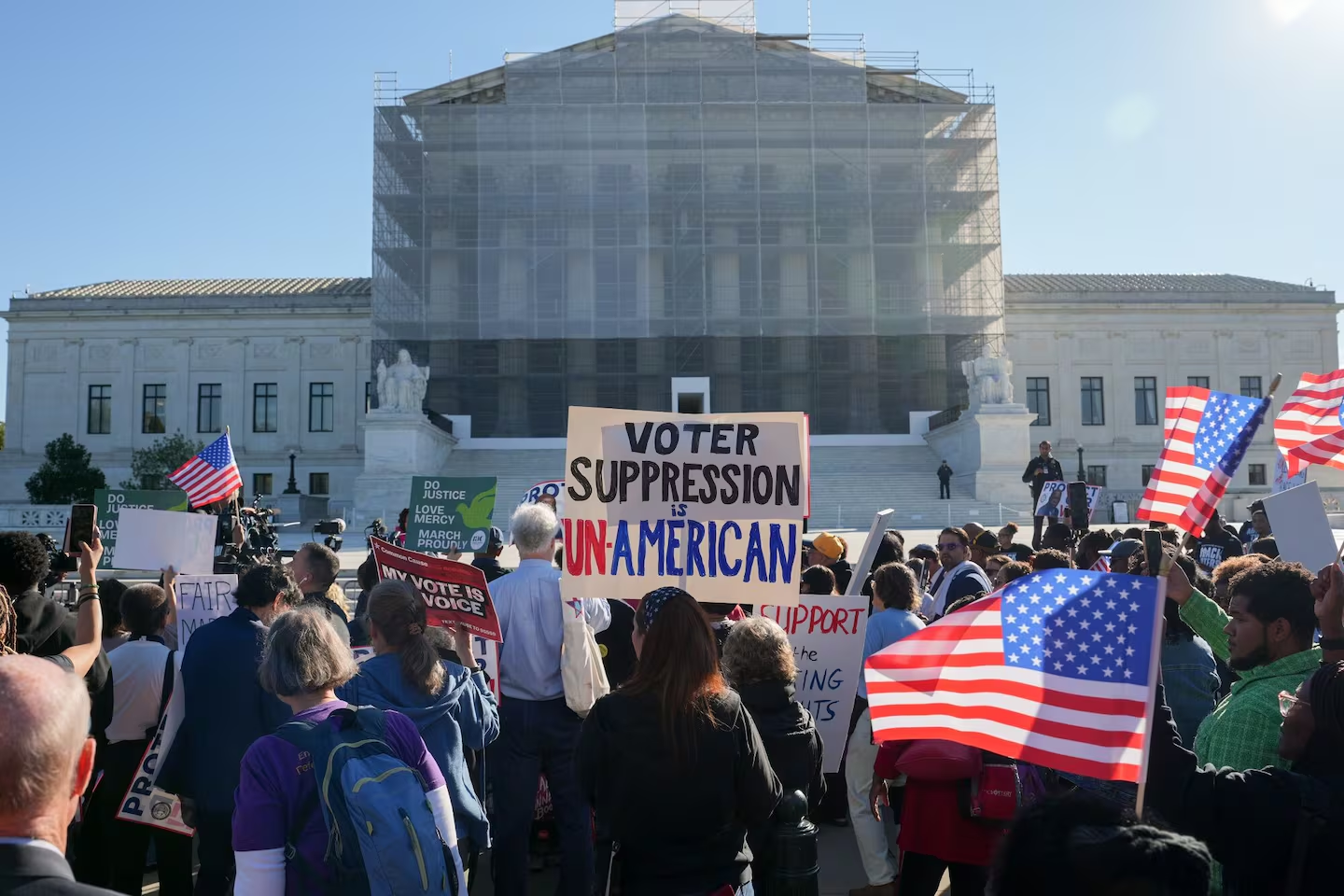
Voting Rights Act Faces Its Biggest Challenge Yet at U.S. Supreme Court
The historic Voting Rights Act of 1965 — a cornerstone of American democracy that outlawed racial discrimination in voting — is facing its most serious threat in decades. The U.S. Supreme Court, dominated by a 6-3 conservative majority, appears ready to weaken Section 2 of the law, which prevents states from drawing voting maps that dilute minority representation.
The case stems from Louisiana, where a new congressional map added a second Black-majority district after a federal judge ruled that the previous map harmed Black voters. However, a group of white voters challenged the new boundaries, claiming they were racially motivated and violated constitutional principles of equal protection.
If the court sides with the challengers, experts warn it could make future racial discrimination cases nearly impossible to win. “If Section 2 is weakened further, states could freely draw maps that silence Black, Latino, Native, and Asian American voters,” said Sarah Brannon of the ACLU.
The Justice Department, echoing arguments from the Trump era, supports limiting how much race can influence districting decisions, arguing for “race-neutral” approaches. Critics say this could effectively “gut” the Voting Rights Act.
Since the 1960s, the law has been a pillar of civil rights, ensuring that minority voices are not suppressed in elections. A ruling against Section 2 would likely reshape the nation’s political landscape ahead of the 2026 elections, potentially giving Republicans more control over congressional redistricting.
As America watches, the Supreme Court’s decision could determine whether the promise of equal voting rights endures — or fades into history.