

Spain Election: Conservatives Lead as Sánchez Faces Major Defeat
Spain’s conservative People’s Party has taken the lead in the country’s snap general election, putting Prime Minister Pedro Sánchez’s political future at risk. The far-right Vox party has also made significant gains, raising the possibility of a new right-wing coalition government and a major shift in Spain’s political direction.

Reporter · CSB News USA
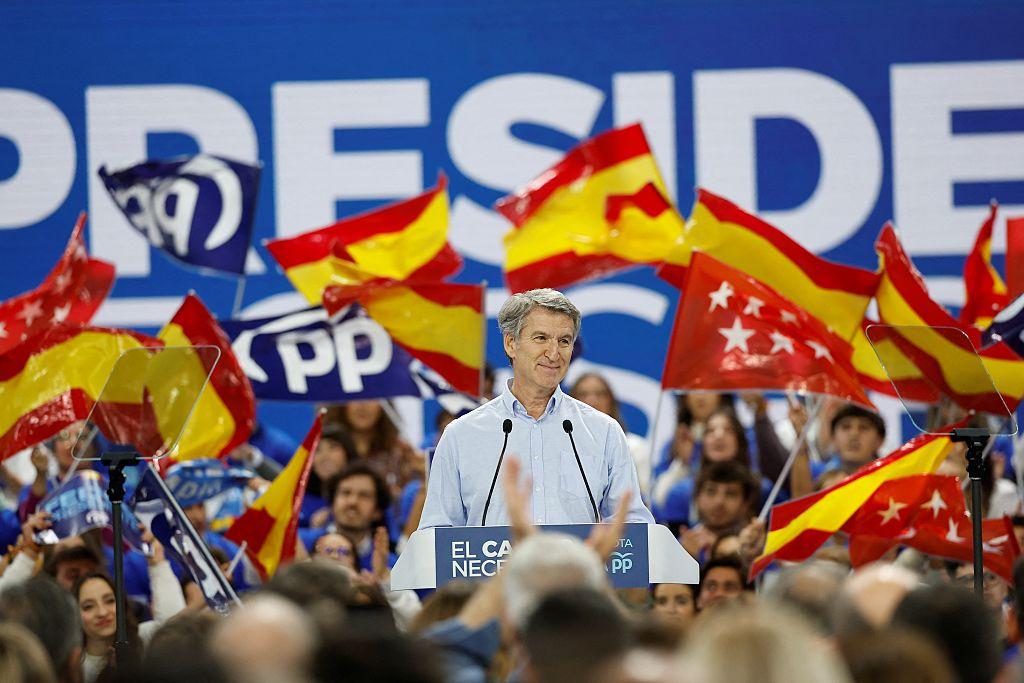
Spain’s conservative People’s Party (PP) has emerged as the leading political force in the country’s November 29 snap general election, dealing a major setback to Prime Minister Pedro Sánchez and his governing Socialist Party (PSOE). The election results have also strengthened the position of the far-right Vox party, raising the possibility of a major political shift in one of Europe’s largest economies.
Early counting figures showed the PP securing 31.7 percent of the vote, ahead of Sánchez’s PSOE, which received 29.7 percent. The far-right Vox party stood in third place with 15.5 percent, according to the preliminary figures reported during the counting process.
However, subsequent results showed slight changes in the vote shares. According to RTVE’s published election results, the PP received approximately 31.5 percent, while the PSOE secured 29.8 percent and Vox received 15.4 percent. The changing figures reflect the progress of the vote count and should not be confused with the initial results.
The most significant development was the combined strength of the conservative and far-right parties in parliament. Spain’s Congress of Deputies has 350 seats, and a party or coalition needs at least 176 seats to secure an absolute majority.
According to the reported election results, the PP secured 133 seats, while Vox won 49. Together with the two seats held by the regional UPN-PP alliance, the right-wing bloc reached 184 seats, comfortably above the majority threshold. This result puts the conservative camp in a strong position to seek control of the next government.
The election represents a major political challenge for Sánchez, who has served as Spain’s prime minister since 2018. His decision to call an early election was intended to strengthen his political position and secure a fresh mandate. Instead, the results have raised serious questions about the future of his leadership and the direction of the country.
The PP is led by Alberto Núñez Feijóo, who has campaigned on promises of economic reform, lower taxes, increased housing construction and stronger action against corruption. Throughout the campaign, Feijóo argued that Spain needed a change in political leadership after years of Socialist government.
The party also sought to attract voters dissatisfied with the rising cost of living, housing shortages and the government’s handling of several national controversies. Its election performance indicates that a substantial section of the Spanish electorate was ready to support an alternative political direction.
Meanwhile, Vox, led by Santiago Abascal, has strengthened its position in national politics. The party has promoted stricter immigration controls, mass deportation proposals for certain migrants, tougher security policies and a more nationalist approach to government.
Vox has also called for Spanish-born citizens to receive priority in access to certain public services and housing. Its political agenda includes reducing government regulations and reversing several policies supported by the Socialist-led administration.
The party’s growing electoral strength is particularly significant because Spain has historically been more cautious about far-right political movements than several other European countries. The country’s experience under the dictatorship of Francisco Franco, which ended following his death in 1975, has shaped political attitudes for decades.
However, Vox’s increasing popularity suggests that the country’s political landscape is changing. The party has already worked with the PP in several regional governments, and its stronger parliamentary position could give it considerable influence over national policymaking.
One of the biggest issues during the election campaign was Spain’s housing crisis. Rising property prices and rental costs have made it increasingly difficult for ordinary citizens, particularly young people and low-income families, to find affordable accommodation.
The issue became even more prominent following the eviction of 87-year-old María del Carmen Abascal from her Madrid apartment. She had lived in the property for more than 70 years, but her landlord sought a substantial rent increase that she could not afford.
Her eviction sparked nationwide protests and became a powerful symbol of the country’s housing difficulties. Although the landlord later agreed to reduce the proposed rent increase, Abascal died in hospital before she could return under the new arrangement.
The incident intensified criticism of Spain’s housing market and placed additional pressure on Sánchez’s government to introduce stronger protections for tenants.
In response, the Socialist administration proposed several housing measures, including restrictions on rent increases, protections against evictions and tighter regulation of temporary accommodation and room rentals. However, the proposals faced opposition in parliament and were blocked by conservative and right-wing lawmakers.
The PP used the issue to criticize the government’s housing policies and promised to increase construction, with a target of building one million homes. The party argued that increasing supply and reducing regulatory barriers would help make accommodation more affordable.
Immigration was another major issue shaping the election. Spain has experienced continued debate over migration, border management and the integration of foreign nationals.
The government’s decision to offer legal status to hundreds of thousands of undocumented migrants drew criticism from conservative groups. The arrival of large numbers of migrants in the Spanish territory of Ceuta, following developments along its border with Morocco, also intensified political disagreements.
Vox made immigration restrictions a central part of its campaign, calling for tougher border controls and large-scale deportations. The PP also promised a stricter approach to immigration, although its position has differed from some of Vox’s proposals.
Corruption allegations involving people close to Sánchez and members of his family also became a major campaign issue. Opposition parties repeatedly questioned the government’s integrity and used the allegations to argue that Spain needed new political leadership.
Sánchez rejected the opposition’s criticism and maintained that his administration had delivered important economic and social improvements since taking office in 2018. He acknowledged that his government had made mistakes but defended its overall record.
The election campaign was also affected by public criticism of the government’s handling of two deadly railway accidents within a relatively short period. The crashes, including an incident in October that killed 69 people, raised questions about transport safety, infrastructure maintenance and government accountability.
The PP and Vox accused the administration of failing to maintain essential infrastructure and protect public safety. The Socialist government, meanwhile, faced pressure to explain the circumstances surrounding the accidents.
Voter participation was another important feature of the election. More than 38 million people were eligible to vote. Preliminary figures reported by Reuters showed turnout reaching approximately 68.1 percent by 6 p.m., considerably higher than the participation recorded at the same point during the 2023 general election. Subsequent provisional figures put overall participation at approximately 79 percent.
The results could have consequences beyond Spain’s borders. Spain is an important member of the European Union and NATO, and changes in its government could influence discussions about immigration, defence spending, economic policy and European relations.
Sánchez has also become a prominent voice among European leaders opposing several positions promoted by US President Donald Trump, particularly on migration and international security. A conservative government supported by Vox could therefore bring a different approach to some international policy debates.
However, an election victory does not automatically mean that a new government takes office immediately. Spain’s political system requires parliamentary support for a candidate to become prime minister. The PP will therefore need to negotiate with potential partners and establish a workable parliamentary majority.
The growing influence of Vox is likely to be central to those negotiations. Although the PP has previously cooperated with Vox in regional administrations, forming a national coalition could involve difficult discussions over immigration, social policies, public spending and other major issues.
For Sánchez and the PSOE, the election result represents a serious setback. The party will have to assess its parliamentary position and determine whether it can build an alternative alliance with smaller political groups.
The coming negotiations will be crucial in determining Spain’s political future. If the PP and its right-wing partners successfully form a government, the country could experience its most significant shift towards conservative and far-right leadership since the restoration of democracy after Franco’s dictatorship.
For now, the election has clearly demonstrated the growing strength of Spain’s political right. The PP’s leading position and Vox’s increased parliamentary influence have created a new political reality, while Sánchez faces one of the most challenging moments of his political career.
Related News
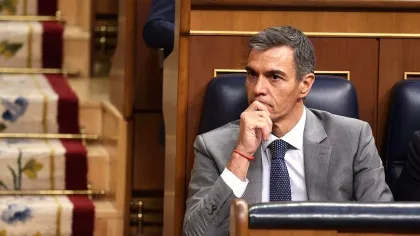
Cost-of-Living Crisis Puts Spain’s Left-Wing Government at Risk of Losing Power

Ukraine Warns of Possible New Russian Attacks, Zelenskyy Urges Allies to Deliver Missiles

Finland Hosts Massive Tesla Light Show with 670 Cars in 2026

Comments 0
Log in or create a free account to join the conversation. You can comment anonymously.
No comments yet. Be the first.