PoK Is Burning, Pakistan Has No Answer
The uprising in Pakistan-occupied Kashmir is not merely a law-and-order crisis — it is the structural indictment of seven decades of misgovernance

PoK Is Burning, Pakistan Has No Answer
The uprising in Pakistan-occupied Kashmir is not merely a law-and-order crisis — it is the structural indictment of seven decades of misgovernance
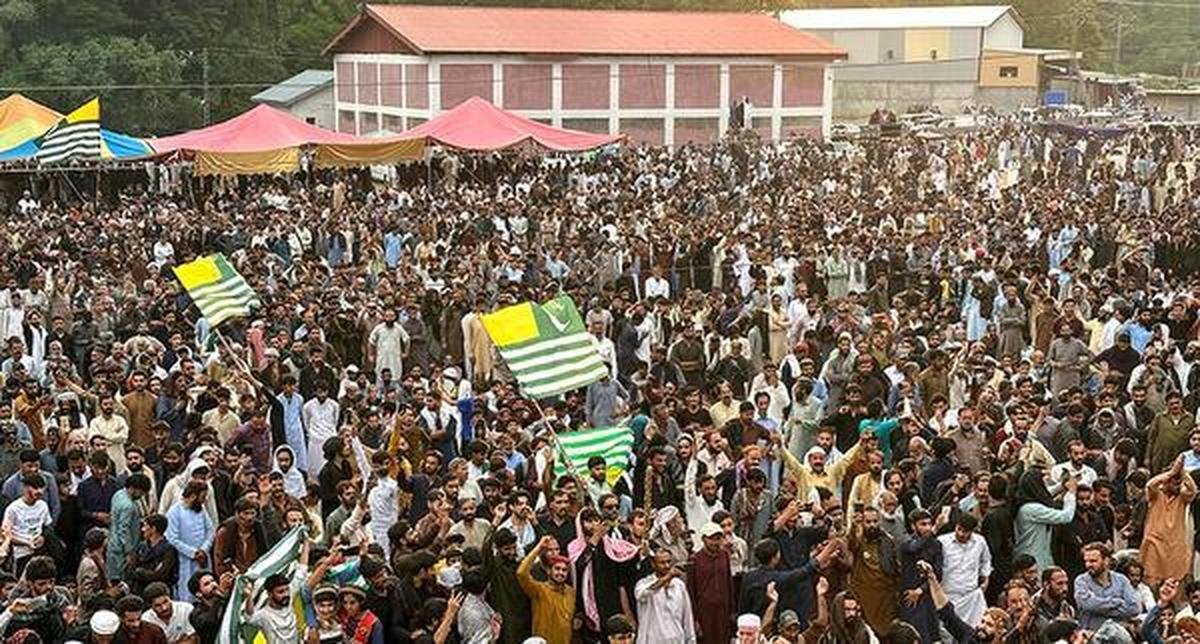
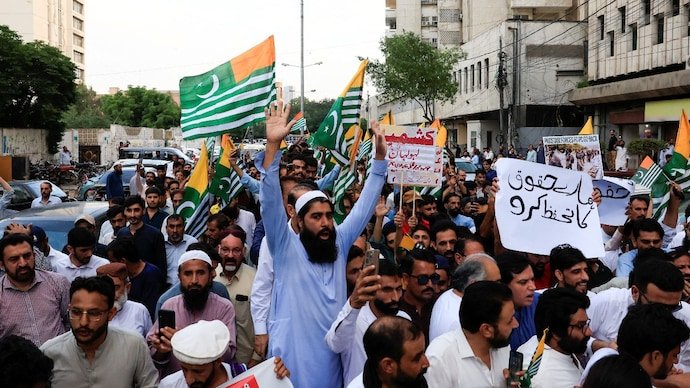
In Rawalakot this June, Pakistani Rangers opened fire on protesters demanding affordable flour and fair representation. In Muzaffarabad, mobile internet was cut to prevent the world from watching. In Islamabad, a civilian action committee — not a militant outfit, not a separatist militia, but a civic body demanding electricity tariff relief — was declared a proscribed terrorist organisation under anti-terrorism law. The irony is staggering: the state that has spent decades accusing India of alleged repression in Jammu & Kashmir has now deployed the full machinery of counter-terrorism against Kashmiris protesting their electricity bills.
Pakistan-occupied Kashmir is burning. And Pakistan has no answer.
What Is Happening
Since early June 2026, PoK has witnessed its most intense civil unrest in recent times. The immediate trigger was a Supreme Court of Pakistan verdict upholding 12 reserved seats in the AJK Legislative Assembly for refugees domiciled elsewhere in Pakistan — a provision residents have long argued is used by Islamabad to install loyalists with no organic roots to the region. The verdict reiterates what many in PoK had long suspected: that their legislature is a puppet, not a democratic institution.
The Jammu and Kashmir Joint Awami Action Committee (JAAC), which had led largely peaceful mass agitation for years over electricity tariffs and food prices, called for renewed protests. Islamabad's response was not dialogue but declaration — the JAAC was proscribed on June 5 under anti-terrorism law, arrest warrants were issued for its leadership, and federal paramilitary forces deployed. Clashes in Rawalakot and surrounding areas have left dozens of civilians dead by multiple accounts. With mobile data suspended across the region, the full toll remains unverifiable — which is, of course, par for the course for Pakistan.
The crisis has not gone unnoticed globally. The United Kingdom, Australia, and Canada have issued formal travel advisories, citing the deteriorating security situation and potential for further unrest. In Britain, where a significant Kashmiri diaspora is politically active, protests have drawn attention to the human rights violations by the Pakistani establishment — images of paramilitary deployment against unarmed civilians circulating widely despite Islamabad's best efforts at an information blackout.
The Structural Rot
The immediate trigger matters less than the underlying decay. PoK residents have protested against electricity tariffs being among the highest in the region, even as the Mangla Dam — located in their territory, supplying power to Punjab — generates revenues that never return to them. Flour and rice prices have spiralled beyond the reach of ordinary citizens. Natural resources are extracted; people, however, receive neither royalties nor representation.
This is not a crisis born in June 2026. It is the accumulated consequence of a governance model in which PoK functions not as a polity with rights but as a strategic buffer — useful to Pakistan as a geopolitical asset, never seriously invested in as a territory with citizens who deserve real services, accountability, and voice. When a population protests flour prices and is designated a terrorist organisation in response, the nature of the relationship between Islamabad and the people it claims to govern becomes easy to decipher.
Islamabad's instinctive response to exposure — whether domestic unrest or international scrutiny — has been equally predictable: amplify anti-India rhetoric, invoke external interference, and manufacture grievances across the Line of Control to divert attention from conditions within. New Delhi has consistently called out this pattern. The current crisis is a textbook iteration — as PoK burns, Pakistani state media and establishment proxies have reflexively pivoted to inflammatory narratives about India, hoping that familiar nationalist noise will drown out the sound of Rangers firing on their own people. However, this script will not find traction. The diaspora is watching. Western governments have taken note. The information blackout has failed.
The Indian Frame: Law, History, and a Failed Occupation
India's position on PoK is legally grounded and repeatedly reaffirmed. The Instrument of Accession signed by Maharaja Hari Singh on October 26, 1947, was unambiguous: the entire princely state of Jammu and Kashmir acceded to India. The Indian Parliament's 1994 resolution made explicit what international law had established — territories under Pakistani control are Indian territory under illegal occupation, and their eventual integration remains a national objective.
This is not revisionism. It is the baseline from which any honest analysis must proceed.
What we are witnessing in PoK is not the failure of governance in a Pakistani province — it is the failure of Islamabad to provide for the people it controls. The distinction is fundamental. Pakistan holds no sovereign mandate over these territories; only the administrative reach maintained through force, patronage, and suppression of political rights. When even that structure produces electricity shortages, food inflation, and rigged legislatures, the occupied population has nowhere to turn — because the occupying power has ensured no legitimate political channel exists.
This crisis is the organic consequence of systemic neglect — decades of treating PoK as a pawn rather than a place, its people as instruments of policy rather than citizens with rights. The banning of JAAC illustrates this with brutal clarity. A civic organisation with material demands — tariffs, prices, fair seats — proscribed under the anti-terror law. Pakistan's threshold for political tolerance in the territory it occupies is, by any measure, lower than that extended to opposition parties in Karachi or Lahore. For a state that insists Kashmir's future must be decided by the aspirations of its people, the management of those aspirations through detention and live fire is a profound and damning self-contradiction.
Prognosis
The people of PoK are not abstractions in a diplomatic dispute — they are Kashmiris, and their suffering is not peripheral to the larger Kashmir question; it is central to it. Every protest in Rawalakot, every internet shutdown in Muzaffarabad, every warrant against a JAAC leader is further evidence of the structural fact that PoK’s governance deficit is not incidental but inherent to its occupation.
New Delhi must raise the situation in every multilateral forum available, amplify PoK civil society voices wherever possible, and ensure the international community understands that the humanitarian crisis unfolding across the Line of Control is a consequence of an unresolved territorial injustice playing out in real time, in full view of a watching world.
Pakistan chose bullets over bread, information blackouts over accountability, proscription over politics. The diaspora has seen it. Western governments have recorded it. History will judge it. And so will the people of PoK.
Dr. Kanchan Lakshman is a Delhi-based National Security analyst.