New Controversy Over UN Report: Sheikh Hasina’s Legal Team Challenges International Narrative on Bangladesh’s 2024 Unrest
A fresh international debate has emerged after former Bangladeshi Prime Minister Sheikh Hasina formally challenged a United Nations human rights report on the violent political unrest that took place in Bangladesh during July and August 2024

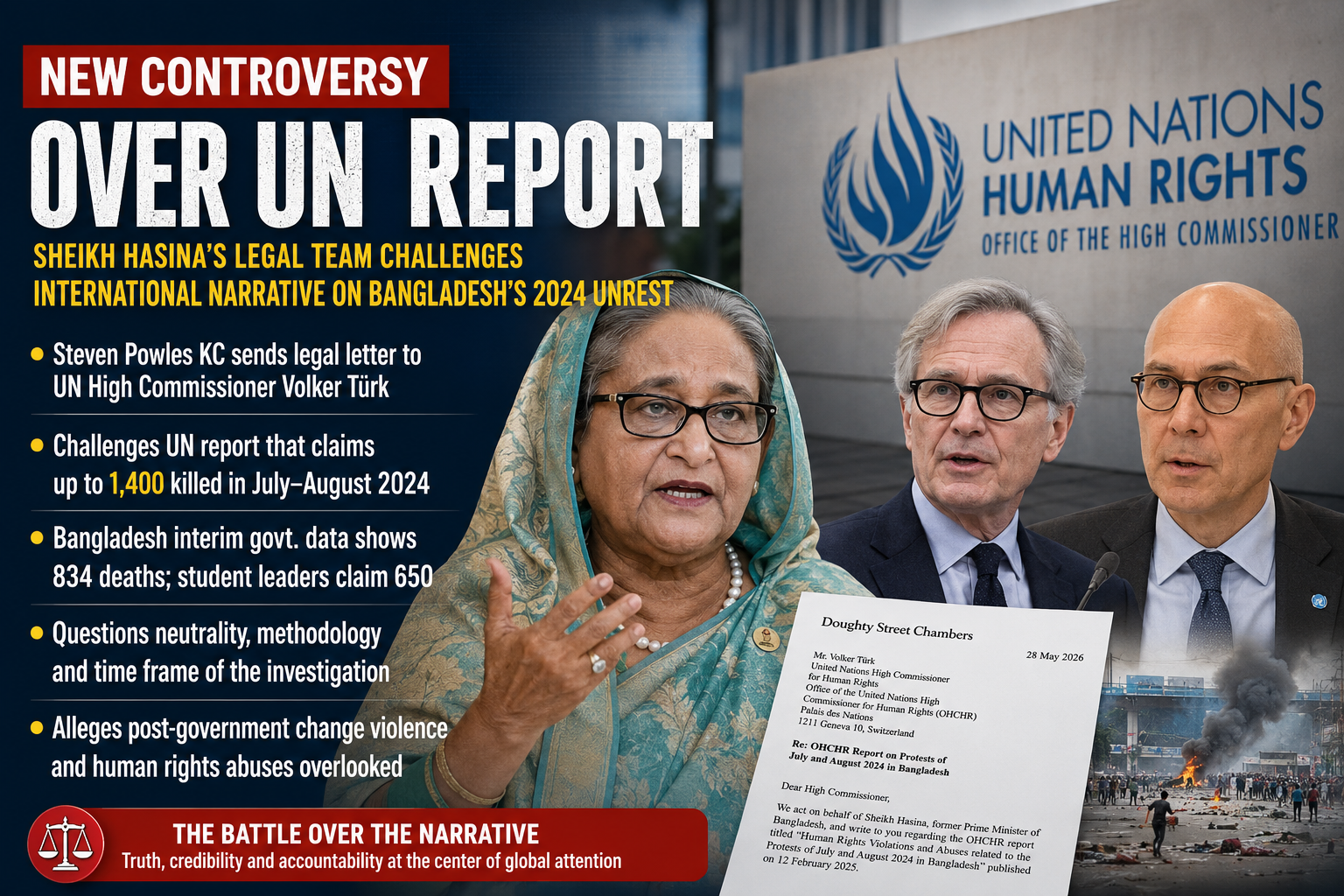
New Controversy Over UN Report: Sheikh Hasina’s Legal Team Challenges International Narrative on Bangladesh’s 2024 Unrest
A fresh international debate has emerged after former Bangladeshi Prime Minister Sheikh Hasina formally challenged a United Nations human rights report on the violent political unrest that took place in Bangladesh during July and August 2024.
London-based barrister Steven Powles KC, acting on behalf of Sheikh Hasina, sent an official letter on May 28, 2026, to Volker Türk, the UN High Commissioner for Human Rights. The letter questioned the methodology, findings, and conclusions of a report published by the Office of the United Nations High Commissioner for Human Rights titled “Human Rights Violations and Abuses related to the Protests of July and August 2024 in Bangladesh.”
The report, published on February 12, 2025, stated that as many as 1,400 people may have been killed during the protests and violence. That figure quickly became central to international media coverage, diplomatic discussions, and global human rights debates surrounding Bangladesh.
However, Sheikh Hasina’s legal team argues that the figure is “grossly inaccurate, exaggerated, and misleading.” According to the letter, Bangladesh’s interim government later published an official gazette listing approximately 834 deaths — significantly lower than the UN estimate. The letter also noted that leaders of the Anti-Discrimination Student Movement had publicly claimed the death toll was around 650.
The legal submission further alleged that the high casualty figure was used to construct an international narrative portraying Sheikh Hasina as someone who ordered a “planned massacre” of peaceful protesters. According to the letter, this narrative helped legitimize the collapse of her government in the eyes of the international community.
The lawyers warned that UN reports based on insufficient verification could undermine the long-term credibility of international human rights investigations.
Questions Over Neutrality of the Investigation
One of the strongest arguments raised in the letter concerns the neutrality of the investigation itself. Sheikh Hasina’s legal team claims that the inquiry was conducted at the invitation of Bangladesh’s interim government and relied excessively on politically aligned sources.
The letter alleges that political opponents of Sheikh Hasina influenced the international investigation in order to establish what it describes as a “one-sided political narrative.” It also claims that opposing perspectives were not given equal consideration before conclusions were reached.
The time frame of the UN investigation has also been challenged. The inquiry focused on events between July 1 and August 15, 2024. According to Hasina’s legal team, this excluded alleged retaliatory violence and human rights abuses that occurred after the interim government assumed power.
The letter additionally highlighted allegations of attacks, intimidation, and violence targeting members and supporters of the Bangladesh Awami League, as well as religious minorities. It argued that such incidents were not adequately reflected in the international investigation.
Allegations Against the Interim Government
The letter also raised concerns about the conduct of the current interim administration. It cited reports by Human Rights Watch and Amnesty International alleging political retaliation, restrictions on freedom of expression, and repression against supporters of the former government.
It further referenced an Article 15 communication submitted to the International Criminal Court alleging crimes against humanity related to the Bangladesh situation.
The letter also referred to statements made by interim government chief adviser Muhammad Yunus. According to Hasina’s lawyers, the 2024 movement was not entirely spontaneous but rather an organized and coordinated political campaign. A figure identified as Mahfuz Alam was described in the letter as one of the movement’s planners.
However, these allegations have not yet been independently verified through an international judicial process.
Background of the 2024 Violence
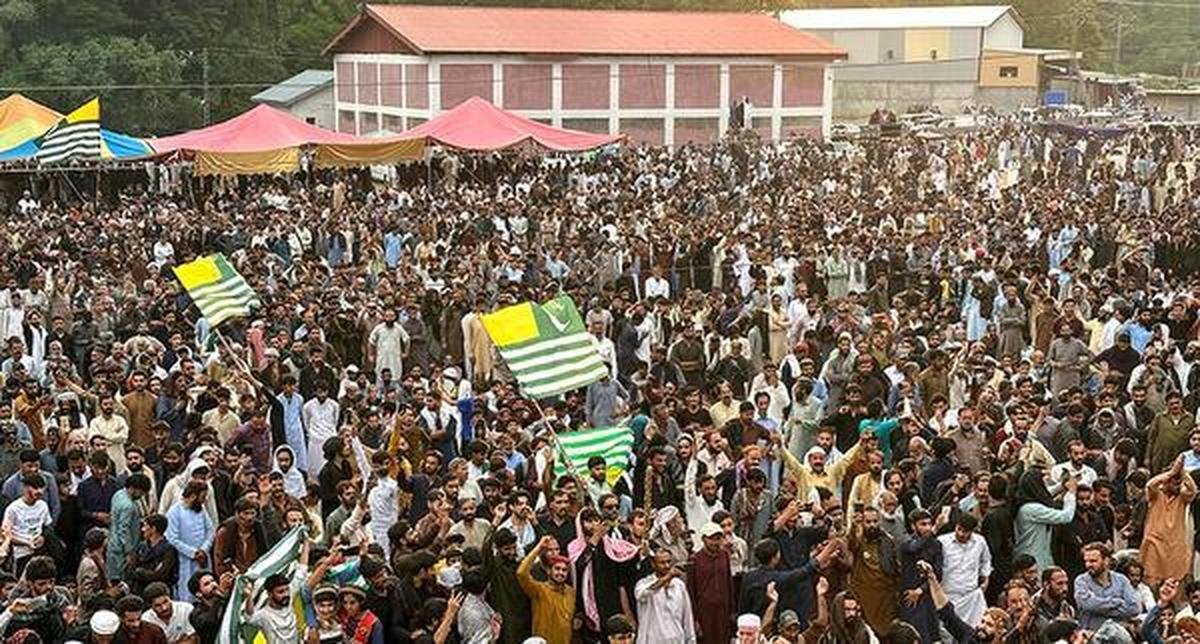
Bangladesh’s July–August 2024 political unrest became one of the most violent periods in the country’s recent history. Protests initially centered on political rights, governance, elections, and state policies, but later escalated into nationwide clashes.
Violence erupted among protesters, police, security forces, pro-government activists, and opposition supporters. Numerous people were killed or injured, while incidents of arson, attacks on infrastructure, mass arrests, and retaliatory violence spread across the country.
The crisis eventually led to the fall of Sheikh Hasina’s government and the formation of an interim administration led by Nobel laureate Muhammad Yunus.
Following publication of the UN report, international media outlets, human rights groups, and diplomatic observers widely cited the findings while discussing Bangladesh’s political situation. The estimate of “up to 1,400 deaths” became one of the most discussed aspects of the report globally.
Human Rights Groups Defend the Report
Human rights organizations and critics of Sheikh Hasina maintain that security forces used excessive and deadly force during the protests and argue that the UN report was based on multiple independent sources, testimonies, and evidence.
According to them, determining an exact death toll in politically chaotic situations is inherently difficult, and the primary purpose of the investigation was to document the broader pattern of human rights violations.
At the same time, supporters of Sheikh Hasina have long argued that international actors and Western media have taken a disproportionately harsh stance against her government while paying less attention to anti-government violence and post-transition reprisals.
What Happens Next?
So far, the Office of the United Nations High Commissioner for Human Rights has not publicly responded to the legal letter. There has also been no indication that the report will be revised or formally reconsidered.
International analysts say determining accurate casualty figures during political conflicts and state violence is often highly complicated due to competing narratives, political polarization, limited access to information, and chaotic ground conditions.
In Bangladesh’s case, the issue remains particularly sensitive because the events of 2024 were not merely a change of government; they also reshaped the country’s political landscape, international relations, and human rights discourse.
Some analysts believe the legal move by Doughty Street Chambers is not simply a formal protest, but part of a broader strategic effort to reshape the international narrative surrounding the 2024 protests, violence, and the fall of Sheikh Hasina’s government.
Global attention is now focused on whether the United Nations will stand by its findings or whether the report could eventually face revision, reassessment, or renewed investigation.