Will Saudi Arabia gain enrichment rights?
The U.S. is moving ahead with a nuclear deal with Saudi Arabia—without key safeguards that once aimed to prevent nuclear weapons development.

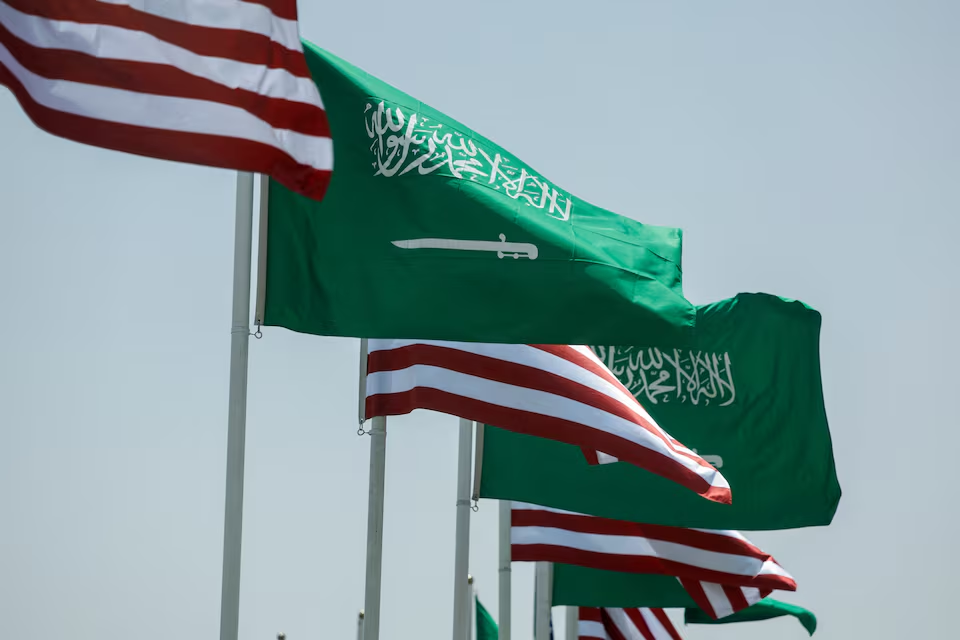
Will Saudi Arabia gain enrichment rights?
🇺🇸 Detailed Explanation in Simple English
The United States is negotiating a civil nuclear agreement with Saudi Arabia to help the kingdom build its first nuclear power plants.
President Donald Trump has informed Congress that he is moving forward with a so-called “123 Agreement” with Saudi Arabia. However, according to documents reviewed by Reuters, this proposed deal does not include some key non-proliferation safeguards that previous U.S. administrations strongly supported.
What Are the “Guardrails”?
In the past, the U.S. insisted that Saudi Arabia:
-
Should not enrich uranium.
-
Should not reprocess spent nuclear fuel.
-
Should accept the “Additional Protocol” of the International Atomic Energy Agency, allowing surprise inspections of nuclear sites.
These measures were designed to prevent Saudi Arabia from developing nuclear weapons.
What Has Changed?
The draft agreement reportedly leaves open the possibility for Saudi Arabia to develop uranium enrichment capabilities. Experts warn that enrichment technology can be used for peaceful energy—but also for making nuclear weapons.
Arms control groups argue that relaxing these safeguards could increase the risk of nuclear proliferation in the Middle East.
Regional Concerns
Saudi Crown Prince Mohammed bin Salman has publicly stated that if Iran develops nuclear weapons, Saudi Arabia would follow.
With global arms control agreements weakening and major powers expanding their arsenals, critics fear this deal could trigger a broader nuclear arms race.
Congressional Review
The 123 Agreement must be submitted to Congress. If both the Senate and the House of Representatives do not block it within 90 days, the agreement will take effect automatically.